How Much Does It Cost to Start an Auto Detailing Business in Massachusetts?
Starting an Auto Detailing Business in Massachusetts typically costs between $7,700 and $154,000, with a median estimate of $46,200. Massachusetts’s cost of living runs 50% above the national average, which increases commercial rent and labor costs. LLC formation in Massachusetts costs $500 to file. Most auto detailing business businesses take 2-8 weeks to launch.
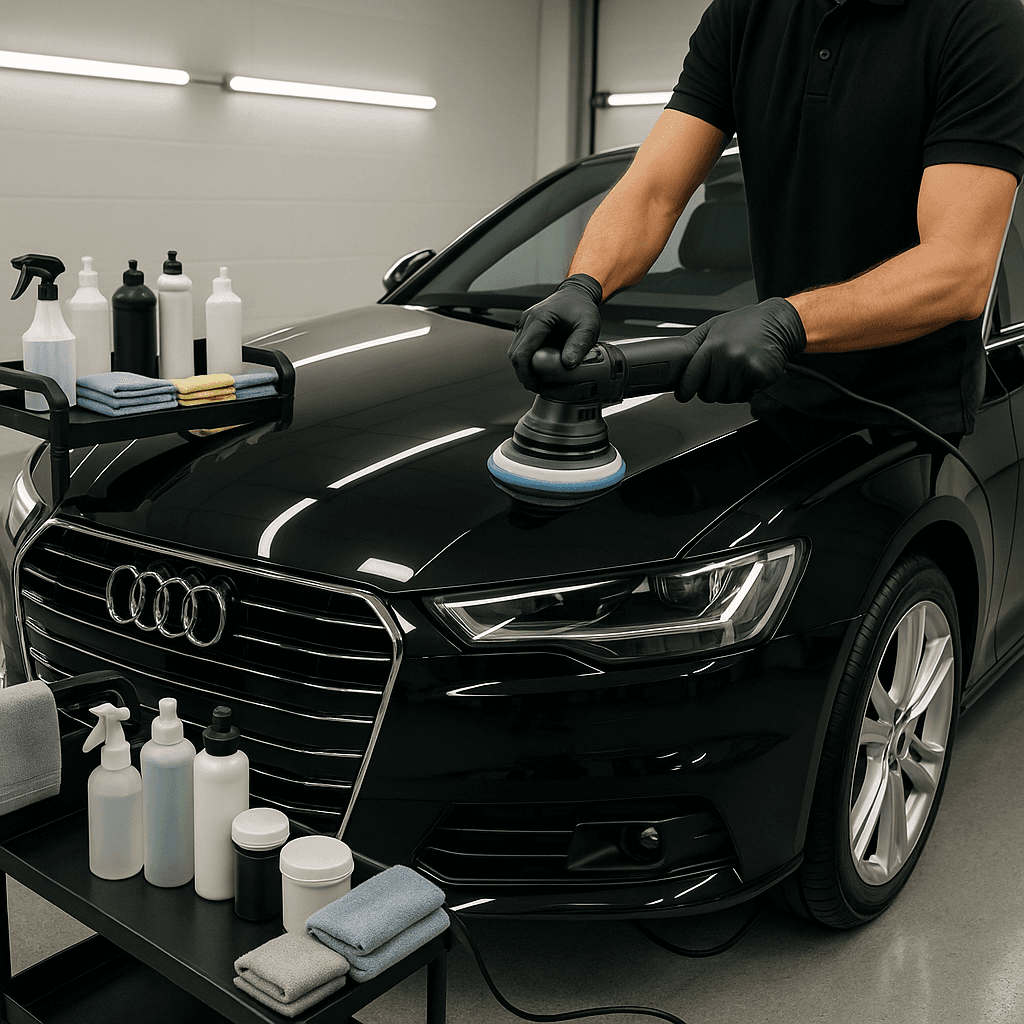
How Much Does It Cost to Start an Auto Detailing Business in Massachusetts?
Low
$7,700
Medium
$46,200
High
$154,000
National average: $5,000 – $100,000
Interactive Startup Cost Calculator
Startup Cost Calculator
Auto Detailing Business in Massachusetts
Options
Startup Costs
$55,132
Monthly Costs
$6,160
First Year Total
$129,052
Full Cost Breakdown
| Cost Category | Low | Medium | High | Notes |
|---|---|---|---|---|
| Work Space or Mobile Setup | $2 | $15,400 | $61,600 | Mobile detailers can start with just a van and equipment, well under the cost of a fixed-location bay. Fixed-location shops require a monthly bay lease that varies by metro and bay size. |
| Detailing Equipment | $3,080 | $12,320 | $38,500 | A professional Rupes BigFoot LHR 21 polisher and a commercial pressure washer are each meaningful three-figure-to-low-four-figure capital purchases. Quality equipment pays back through superior results and faster job completion. |
| Ceramic Coating & Product Inventory | $1,540 | $6,160 | $23,100 | Ceramic coatings (Gtechniq, System X, Ceramic Pro) are sold as per-application kits with prices that scale with durability and gloss level. Building manufacturer-direct supplier accounts unlocks wholesale pricing but requires a track record. |
| Business License & Insurance | $770 | $3,080 | $9,240 | Garage keepers liability (covering vehicles in your care) is essential — even a single scratch or door-ding claim can wipe out a week of margin if uninsured. |
| Marketing & Portfolio | $462 | $3,080 | $12,320 | Before/after transformation photos on Instagram are the most powerful detailing marketing tool. Invest in good camera equipment. |
| Vehicle (optional) | $2 | $12,320 | $46,200 | A reliable cargo van with water tank, generator, and equipment racks is the standard mobile setup. The complete rig — vehicle plus build-out — is a substantial four-to-low-five-figure investment. |
| Certifications & Training (optional) | $308 | $1,540 | $7,700 | International Detailing Association (https://the-ida.com/) certification and manufacturer-specific coating certifications justify premium rates. Ceramic Pro and Gtechniq certifications are typically a low-to-mid four-figure investment. |
| Marketing & Online Presence (optional) | $308 | $1,232 | $3,850 | Before-and-after photos on Instagram are the most effective marketing for detailers. |
| Total Startup Cost | $5,854 | $40,040 | $144,760 | Required costs only |
Licenses & Permits in Massachusetts
Licenses & Permits in Massachusetts
General Business License
Massachusetts does not have a statewide general business license, but businesses must register their entity with the Massachusetts Secretary of State (Corporations Division) and register with the Massachusetts Department of Revenue for sales tax and employer tax purposes. Many Massachusetts cities and towns require local business certificates — Boston, Cambridge, Worcester, and other municipalities have their own licensing systems. The state offers a MassTaxConnect portal for tax registration.
Industry-Specific Licenses
- Food Establishment Permit — Massachusetts Department of Public Health or Local Board of HealthCost: Varies — contact agency • Renewal: Annual
- Home Improvement Contractor Registration — Massachusetts Office of Consumer Affairs and Business RegulationCost: Varies — contact agency • Renewal: Biennial
- Cosmetology Shop License — Massachusetts Board of Registration of CosmetologyCost: Varies — contact agency • Renewal: Biennial
- Real Estate Broker License — Massachusetts Board of Registration of Real Estate Brokers and SalespersonsCost: Varies — contact agency • Renewal: Biennial
- Child Care Program License — Massachusetts Department of Early Education and Care (EEC)Cost: Varies — contact agency • Renewal: Annual
- Common Victualler License and All Alcohol License — Massachusetts Alcoholic Beverages Control Commission or Local License AuthorityCost: Varies — contact agency • Renewal: Annual
- Marijuana Retailer License — Massachusetts Cannabis Control CommissionCost: Varies — contact agency • Renewal: Annual
- Transportation Network Company License — Massachusetts Department of Public UtilitiesCost: Varies — contact agency • Renewal: Annual
Home-Based Business Rules
Massachusetts cities and towns regulate home-based businesses through local zoning bylaws. Boston allows home occupations with restrictions on signage, customer visits, employees, and the proportion of home space used for business. Many Massachusetts communities restrict the types of businesses allowed as home occupations. Massachusetts's Chapter 40A amendments have expanded housing-based business opportunities, but commercial regulations vary widely by municipality.
Monthly Operating Costs
After launch, plan for these ongoing monthly expenses for your Auto Detailing Business:
Low
$1,000/mo
Medium
$4,000/mo
High
$12,000/mo
Revenue Potential
Annual Revenue Range
$40,000 – $350,000 (annual)
Profit Margins
20-40% net
Break-Even Timeline
1-4 months
How Massachusetts Compares to Neighboring States
Massachusetts is a higher-cost state for starting an Auto Detailing Business, with a cost-of-living index of 149.5 (national average is 100). Compared to neighboring New York ($41,700 median startup cost), Massachusetts has higher costs for an Auto Detailing Business.
| State | Est. Cost | LLC Fee |
|---|---|---|
| Massachusetts (current) | $46,200 | $500 |
| New York | $41,700 | $200 |
| Vermont | $32,700 | $125 |
| New Hampshire | $35,100 | $102 |
| Rhode Island | $33,600 | $150 |
| Connecticut | $35,700 | $120 |
Common Mistakes to Avoid
- 1
Undercharging — paint correction and ceramic coating are skilled-labor services and should be priced for the hours and materials they actually consume, not undercut against express car-wash pricing
- 2
Not getting certified in ceramic coatings before offering the service
- 3
Skipping garagekeeper's insurance — a single paint scratch claim on a client's vehicle can wipe out a week of margin
- 4
Not building a portfolio from day one — document every car with photos before and after
- 5
Expanding too fast without mastering paint correction — quality control issues destroy reputation quickly
Next Steps to Launch Your Auto Detailing Business
- 1
Form your LLC in Massachusetts — protects personal assets if a vehicle is damaged during detailing (filing fee: $500). If you would rather not file the paperwork yourself, you can compare business formation services.
This is a paid link. If you sign up through it, we earn a commission at no extra cost to you.
- 2
Obtain a business license in Massachusetts and any local municipal business permit for mobile or shop-based operations
- 3
Get general liability insurance — required by auto dealerships and fleet clients before working on their vehicles
- 4
Obtain a garagekeeper's liability policy if operating a fixed location — covers customer vehicles while in your care
- 5
Research Massachusetts water discharge requirements for mobile detailing — some cities require water reclamation systems for waterless or steam detailing
- 6
Invest in a commercial-grade pressure washer, DA polisher, steam cleaner, and product supply from Chemical Guys or Meguiar's
- 7
Set up an online booking system (Jobber, HouseCall Pro) — reduces no-shows and automates appointment reminders
- 8
Build a Google Business Profile and collect reviews from first customers — local SEO drives the majority of detailing leads
Frequently Asked Questions
Related Businesses in Massachusetts
Car Wash
Automotive$124,500 – $1,554,000
View in Massachusetts →
Auto Repair Shop
Automotive$75,000 – $500,000
View in Massachusetts →
Tire Shop
Automotive$50,000 – $400,000
View in Massachusetts →
Towing Company
Automotive$50,000 – $400,000
View in Massachusetts →
Used Car Dealership
Automotive$50,000 – $600,000
View in Massachusetts →
Start an Auto Detailing Business in Other States
See the national overview for Auto Detailing Business or browse all businesses you can start in Massachusetts.