How Much Does It Cost to Start an Ice Cream Shop in Arkansas?
Starting an Ice Cream Shop in Arkansas typically costs between $16,200 and $162,000, with a median estimate of $60,750. Arkansas’s cost of living is 11% below the national average, which helps reduce operating expenses like commercial rent and labor. LLC formation in Arkansas costs $45 to file. Most ice cream shop businesses take 2-4 months to launch.
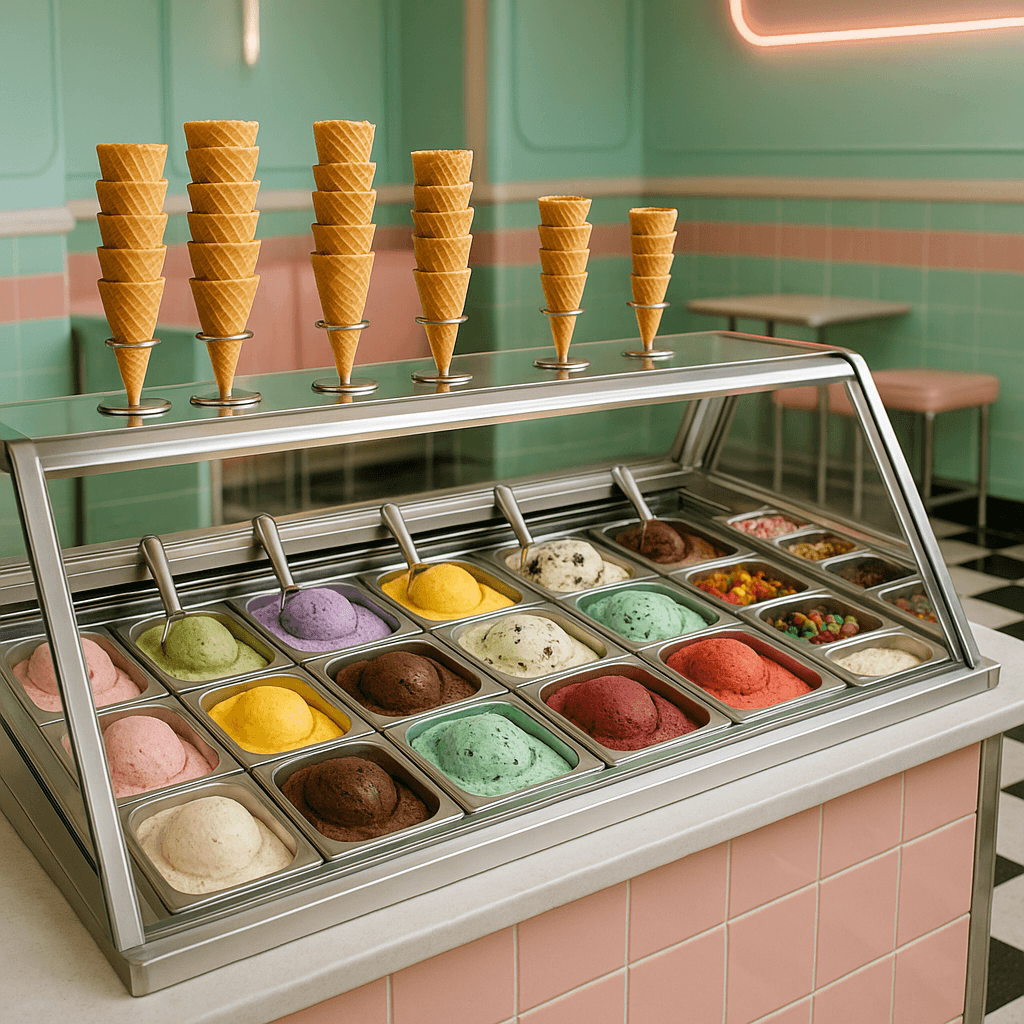
How Much Does It Cost to Start an Ice Cream Shop in Arkansas?
Low
$16,200
Medium
$60,750
High
$162,000
National average: $20,000 – $200,000
Interactive Startup Cost Calculator
Startup Cost Calculator
Ice Cream Shop in Arkansas
Options
Startup Costs
$72,090
Monthly Costs
$8,100
First Year Total
$169,290
Full Cost Breakdown
| Cost Category | Low | Medium | High | Notes |
|---|---|---|---|---|
| Retail Space Lease & Build-Out | $2,430 | $20,250 | $64,800 | Ice cream shops thrive in tourist areas and busy shopping districts. Even 300-400 sq ft is sufficient. |
| Ice Cream & Refrigeration Equipment | $8,100 | $24,300 | $64,800 | A commercial soft-serve machine is a meaningful four-figure capital purchase. Gelato display cases are a four-figure capital line item each. |
| Initial Inventory | $1,620 | $4,860 | $12,150 | Carrying ice cream from a local creamery adds quality and local appeal. Consider mix-to-order options. |
| Licenses & Permits | $243 | $1,215 | $3,240 | Dairy permits are required in many states for shops serving milk-based products. Check state regulations. |
| Furniture, Decor & Branding | $1,620 | $6,480 | $20,250 | Instagrammable decor is an enormous driver of free marketing for ice cream shops. Invest in the aesthetic. |
| Insurance | $648 | $2,025 | $4,860 | Product liability covers claims from food illness. Slip-and-fall coverage is important in high-traffic shops. |
| Marketing & Grand Opening | $810 | $3,240 | $9,720 | Opening day free cone events drive massive social sharing. Budget for a memorable grand opening. |
| Working Capital Reserve | $4,050 | $9,720 | $28,350 | Ice cream is highly seasonal — budget reserves for winter months in northern states. |
| Total Startup Cost | $19,521 | $72,090 | $208,170 | Required costs only |
Licenses & Permits in Arkansas
Licenses & Permits in Arkansas
General Business License
Arkansas does not have a statewide general business license, but businesses must register with the Secretary of State for entity formation and with the Department of Finance and Administration for sales tax purposes. Individual cities and counties issue their own business licenses. Fayetteville, Little Rock, and other municipalities have their own business licensing requirements and fees.
Industry-Specific Licenses
- Food Service Permit — Arkansas Department of Health — Food Protection ProgramCost: Varies — contact agency • Renewal: Annual
- Contractor License — Arkansas Contractors Licensing BoardCost: Varies — contact agency • Renewal: Annual
- Cosmetology Shop License — Arkansas State Board of CosmetologyCost: Varies — contact agency • Renewal: Annual
- Child Care Facility License — Arkansas Division of Child Care and Early Childhood EducationCost: Varies — contact agency • Renewal: Annual
- Motor Carrier Permit — Arkansas Department of TransportationCost: Varies — contact agency • Renewal: Annual
- Real Estate Broker License — Arkansas Real Estate CommissionCost: Varies — contact agency • Renewal: Annual
- Pesticide Business License — Arkansas Department of AgricultureCost: Varies — contact agency • Renewal: Annual
- Motor Vehicle Dealer License — Arkansas Motor Vehicle CommissionCost: Varies — contact agency • Renewal: Annual
Home-Based Business Rules
Home-based businesses in Arkansas are regulated by local municipal ordinances. Most Arkansas cities allow home occupations in residential zones with restrictions on signage, traffic, and commercial storage. Rural areas outside municipal boundaries generally have no restrictions on home-based businesses. Arkansas Act 571 clarified that home-based food businesses are legal under certain conditions.
Monthly Operating Costs
After launch, plan for these ongoing monthly expenses for your Ice Cream Shop:
Low
$4,000/mo
Medium
$10,000/mo
High
$25,000/mo
Revenue Potential
Annual Revenue Range
$80,000 – $500,000 (annual)
Profit Margins
10-18%
Break-Even Timeline
12-24 months
How Arkansas Compares to Neighboring States
Arkansas is one of the more affordable states for launching an Ice Cream Shop, with a cost-of-living index of 88.7 (national average is 100). Compared to neighboring Missouri ($62,250 median startup cost), Arkansas offers lower costs for an Ice Cream Shop.
Common Mistakes to Avoid
- 1
Ignoring seasonality — northern ice cream shops typically earn the bulk of their revenue across the warm-weather months
- 2
Not differentiating — unique flavors and Instagram-worthy presentations drive word of mouth
- 3
Underestimating equipment maintenance — soft-serve machines require constant calibration and cleaning
- 4
Opening in a location with no foot traffic — ice cream is an impulse purchase requiring visibility
- 5
Not managing freezer temperature logs — one power outage or equipment failure can destroy thousands in inventory
Next Steps to Launch Your Ice Cream Shop
- 1
Register your Ice Cream Shop as an LLC with the Arkansas Secretary of State ($45 filing fee). If you would rather not file the paperwork yourself, you can compare business formation services.
This is a paid link. If you sign up through it, we earn a commission at no extra cost to you.
- 2
Obtain a Arkansas retail food establishment permit and dairy handler certification if making ice cream in-house
- 3
Pass the Arkansas health department inspection for your commercial dairy/cold food production area
- 4
Purchase commercial soft-serve machines, batch freezers, or dipping cabinets — collectively a substantial five-figure capital outlay
- 5
Establish wholesale accounts with your ice cream manufacturer or dairy supplier for consistent product
- 6
Get general liability and commercial property insurance for your shop — typically a low-to-mid four-figure annual premium
- 7
Apply for a Arkansas sales tax permit and set up your POS system with flavor/topping tracking
- 8
Plan your seasonal hours and staffing schedule — summer is peak season, plan inventory and staff levels accordingly
Frequently Asked Questions
Related Businesses in Arkansas
Coffee Shop
Food & Beverage$60,000 – $350,000
View in Arkansas →
Bakery
Food & Beverage$20,000 – $300,000
View in Arkansas →
Food Truck
Food & Beverage$45,000 – $200,000
View in Arkansas →
Juice Bar & Smoothie Shop
Food & Beverage$25,000 – $250,000
View in Arkansas →
Restaurant
Food & Beverage$175,000 – $750,000
View in Arkansas →
Start an Ice Cream Shop in Other States
See the national overview for Ice Cream Shop or browse all businesses you can start in Arkansas.