How Much Does It Cost to Start a Medical Practice in North Dakota?
Starting a Medical Practice in North Dakota typically costs between $123,000 and $820,000, with a median estimate of $328,000. North Dakota’s cost of living is 9% below the national average, which helps reduce operating expenses like commercial rent and labor. LLC formation in North Dakota costs $135 to file. Most medical practice businesses take 6-18 months to launch.
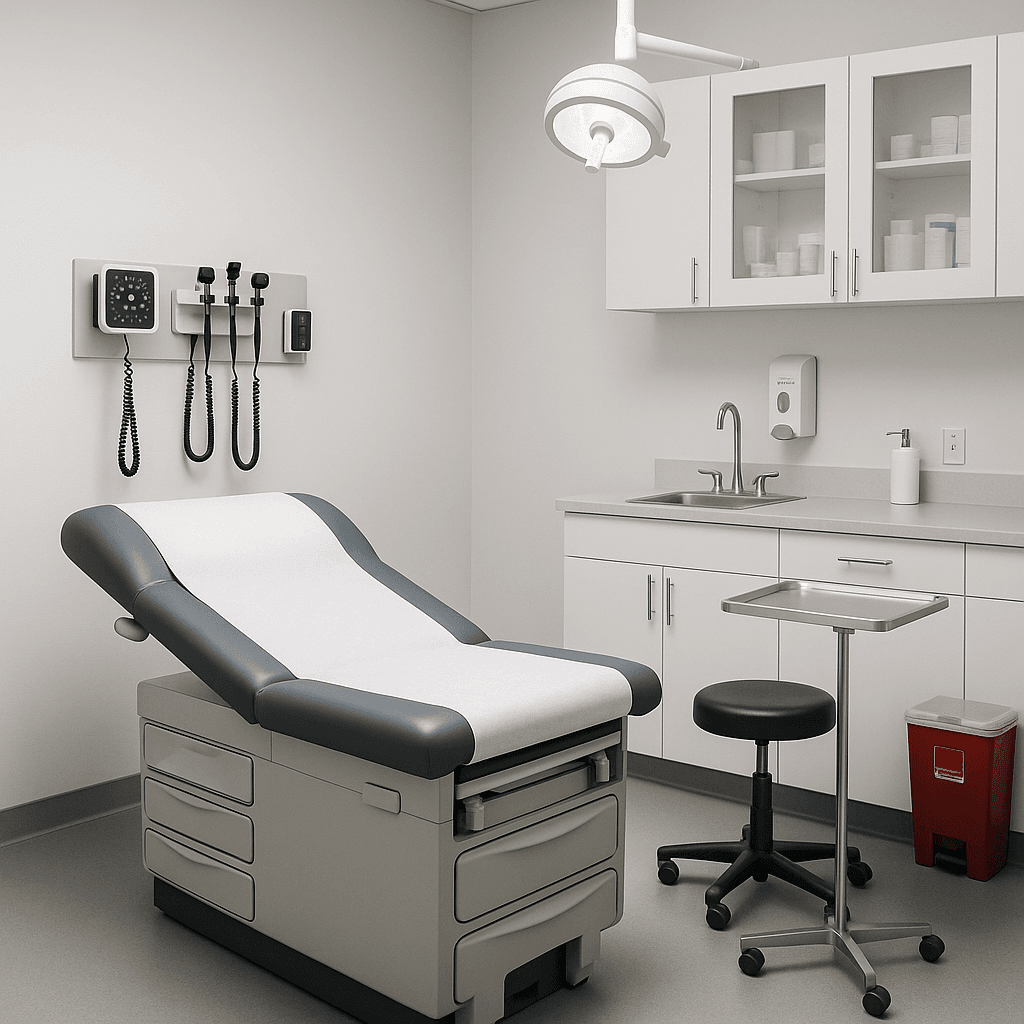
How Much Does It Cost to Start a Medical Practice in North Dakota?
Low
$123,000
Medium
$328,000
High
$820,000
National average: $150,000 – $1,000,000
Interactive Startup Cost Calculator
Startup Cost Calculator
Medical Practice in North Dakota
Options
Startup Costs
$360,800
Monthly Costs
$65,600
First Year Total
$1,148,000
Full Cost Breakdown
| Cost Category | Low | Medium | High | Notes |
|---|---|---|---|---|
| Medical Equipment | $24,600 | $82,000 | $328,000 | A basic primary care office can be outfitted in the low five figures, while imaging-heavy or procedure-heavy specialties (cardiology, dermatology, orthopedics) typically run well into six figures for diagnostic and procedural equipment alone. |
| Office Lease & Build-Out | $32,800 | $82,000 | $246,000 | Medical office build-out runs significantly higher per square foot than retail or general office space because plumbing, HVAC, and ADA accessibility code work scales with the number of exam rooms. A modest 3-exam-room primary care suite in roughly 2,000 sq ft typically requires a multi-hundred-thousand-dollar build-out budget. |
| Licensing & Credentialing | $4,100 | $12,300 | $28,700 | Insurance credentialing with major commercial payers takes 90-180 days, and Medicare and Medicaid enrollment runs 60-120 days. DEA practitioner registration is a federal fee paid per three-year registration period (current schedule at https://www.dea.gov/drug-information/drug-policy/registration). Outsourced credentialing services typically charge a few thousand dollars per provider to manage the paperwork and follow-up. |
| EHR & Practice Management Software | $6,560 | $20,500 | $49,200 | Epic, Athenahealth, and eClinicalWorks are the dominant EHR platforms. Cloud-based EHRs are typically priced per provider on a monthly subscription that scales with the practice's user count and module mix. CMS Promoting Interoperability requirements (formerly Meaningful Use) drive baseline feature requirements. |
| Insurance | $12,300 | $28,700 | $65,600 | Medical malpractice premiums vary enormously by specialty. Primary care physicians pay a fraction of what high-risk specialists like OB/GYN and neurosurgery pay — premium spreads of an order of magnitude or more between low-risk and high-risk specialties are routine, with state tort environment driving further variation. |
| Medical Supplies & Drugs | $8,200 | $24,600 | $65,600 | A primary care practice's opening vaccine inventory typically runs into the tens of thousands. McKesson, Cardinal Health, and Medline offer wholesale pricing for established practices. |
| Marketing & Patient Acquisition | $4,100 | $12,300 | $32,800 | Patient acquisition costs on Google Ads vary widely by market and competition; healthcare keywords are among the more expensive paid-search verticals. Zocdoc charges per provider on a monthly subscription and drives bookings most effectively in metros where the platform has patient density. |
| Working Capital Reserve | $41,000 | $98,400 | $246,000 | Medical practices have significant fixed costs (physician salary, staff, rent) and slow revenue ramp due to insurance credentialing delays. Maintain 12 months of operating costs in reserve. |
| Total Startup Cost | $133,660 | $360,800 | $1,061,900 | Required costs only |
Licenses & Permits in North Dakota
Licenses & Permits in North Dakota
General Business License
North Dakota does not have a statewide general business license. Businesses must register their entity with the North Dakota Secretary of State and register with the North Dakota Office of State Tax Commissioner for sales and use tax purposes. North Dakota has minimal business regulation relative to most states. Some cities, particularly Fargo, Bismarck, and Grand Forks, require local business licenses, but many communities have no local licensing requirements.
Industry-Specific Licenses
- Food Establishment License — North Dakota Department of Health and Human Services — Division of Food and LodgingCost: Varies — contact agency • Renewal: Annual
- General Contractor License — North Dakota Secretary of State (registration only, no state license required for most)Cost: Varies — contact agency • Renewal: Annual
- Cosmetology Salon License — North Dakota State Board of CosmetologyCost: Varies — contact agency • Renewal: Annual
- Real Estate Broker License — North Dakota Real Estate CommissionCost: Varies — contact agency • Renewal: Annual
- Child Care Center License — North Dakota Department of Health and Human Services — Early Childhood ServicesCost: Varies — contact agency • Renewal: Annual
- Commercial Pesticide Applicator License — North Dakota Department of AgricultureCost: Varies — contact agency • Renewal: Annual
- Retail Liquor License — North Dakota Office of the Attorney General — Alcoholic Beverage LicensingCost: Varies — contact agency • Renewal: Annual
- Oil and Gas Operator License — North Dakota Industrial Commission — Oil and Gas DivisionCost: Varies — contact agency • Renewal: Annual
Home-Based Business Rules
Home-based businesses in North Dakota face minimal regulation in rural and unincorporated areas, which represent most of the state's land area. Fargo, Bismarck, and other cities regulate home occupations through local zoning ordinances with standard restrictions on signage and customer traffic. North Dakota's small-town culture generally supports home-based businesses. The state's cottage food law supports home-based food production and direct consumer sales subject to a state-defined annual cap.
Monthly Operating Costs
After launch, plan for these ongoing monthly expenses for your Medical Practice:
Low
$30,000/mo
Medium
$80,000/mo
High
$200,000/mo
Revenue Potential
Annual Revenue Range
$30,000 – $400,000 (monthly)
Profit Margins
15%-30% net profit typical for established primary care
Break-Even Timeline
24-48 months
How North Dakota Compares to Neighboring States
North Dakota is one of the more affordable states for launching a Medical Practice, with a cost-of-living index of 91.1 (national average is 100). Compared to neighboring Minnesota ($376,000 median startup cost), North Dakota offers lower costs for a Medical Practice.
| State | Est. Cost | LLC Fee |
|---|---|---|
| North Dakota (current) | $328,000 | $135 |
| Minnesota | $376,000 | $155 |
| South Dakota | $332,000 | $150 |
| Montana | $388,000 | $35 |
Common Mistakes to Avoid
- 1
Starting insurance credentialing without 6 months lead time — plan for 90-180 days per payer minimum
- 2
Underestimating build-out costs — medical office construction routinely overruns initial estimates because plumbing, HVAC, and ADA accessibility code work scales nonlinearly with the number of exam rooms
- 3
Hiring too much staff before patient volume is established — start lean with cross-trained staff
- 4
Not hiring a dedicated billing specialist — improper medical coding produces materially higher claim denial rates and revenue cycle delays that compound monthly
- 5
Skipping cyber liability insurance — healthcare is consistently the most expensive sector for data breaches per the IBM Cost of a Data Breach Report (https://www.ibm.com/reports/data-breach), with per-incident costs running well into eight figures
- 6
Not joining Medicare and Medicaid as a provider — these payers represent a substantial share of the patient population in most U.S. markets and excluding them shrinks the addressable patient base materially
Next Steps to Launch Your Medical Practice
- 1
Obtain your North Dakota medical license from the North Dakota Medical Board and complete all required continuing education
- 2
Register your Medical Practice as a professional LLC or PLLC with the North Dakota Secretary of State ($135 filing fee). If you would rather not file the paperwork yourself, you can compare business formation services.
This is a paid link. If you sign up through it, we earn a commission at no extra cost to you.
- 3
Obtain DEA registration for prescribing controlled substances — required before seeing patients
- 4
Apply for your NPI (National Provider Identifier) number through NPPES — needed for all insurance billing
- 5
Credentialing with Medicare, Medicaid, Blue Cross, Aetna, and other major insurers (3–6 month process)
- 6
Get medical malpractice (professional liability) insurance — standard coverage tiers run into the low-seven-figure-per-incident / mid-seven-figure-aggregate range for most specialties; annual premiums vary widely by specialty risk and state tort environment
- 7
Implement a HIPAA-compliant EHR system (Epic, Athena, DrChrono) and patient portal before seeing patients
- 8
Complete your CLIA laboratory registration if you plan to run any in-office lab tests
Frequently Asked Questions
Related Businesses in North Dakota
Dental Practice
Health & Wellness$350,000 – $1,000,000
View in North Dakota →
Chiropractic Office
Health & Wellness$100,000 – $300,000
View in North Dakota →
Physical Therapy Clinic
Health & Wellness$60,000 – $450,000
View in North Dakota →
Mental Health Practice
Health & Wellness$15,000 – $150,000
View in North Dakota →
Pharmacy
Health & Wellness$250,000 – $1,000,000
View in North Dakota →
Start a Medical Practice in Other States
See the national overview for Medical Practice or browse all businesses you can start in North Dakota.