How Much Does It Cost to Start a Convenience Store in Indiana?
Starting a Convenience Store in Indiana typically costs between $43,000 and $645,000, with a median estimate of $240,800. Indiana’s cost of living is 9% below the national average, which helps reduce operating expenses like commercial rent and labor. LLC formation in Indiana costs $95 to file. Most convenience store businesses take 3-9 months to launch.
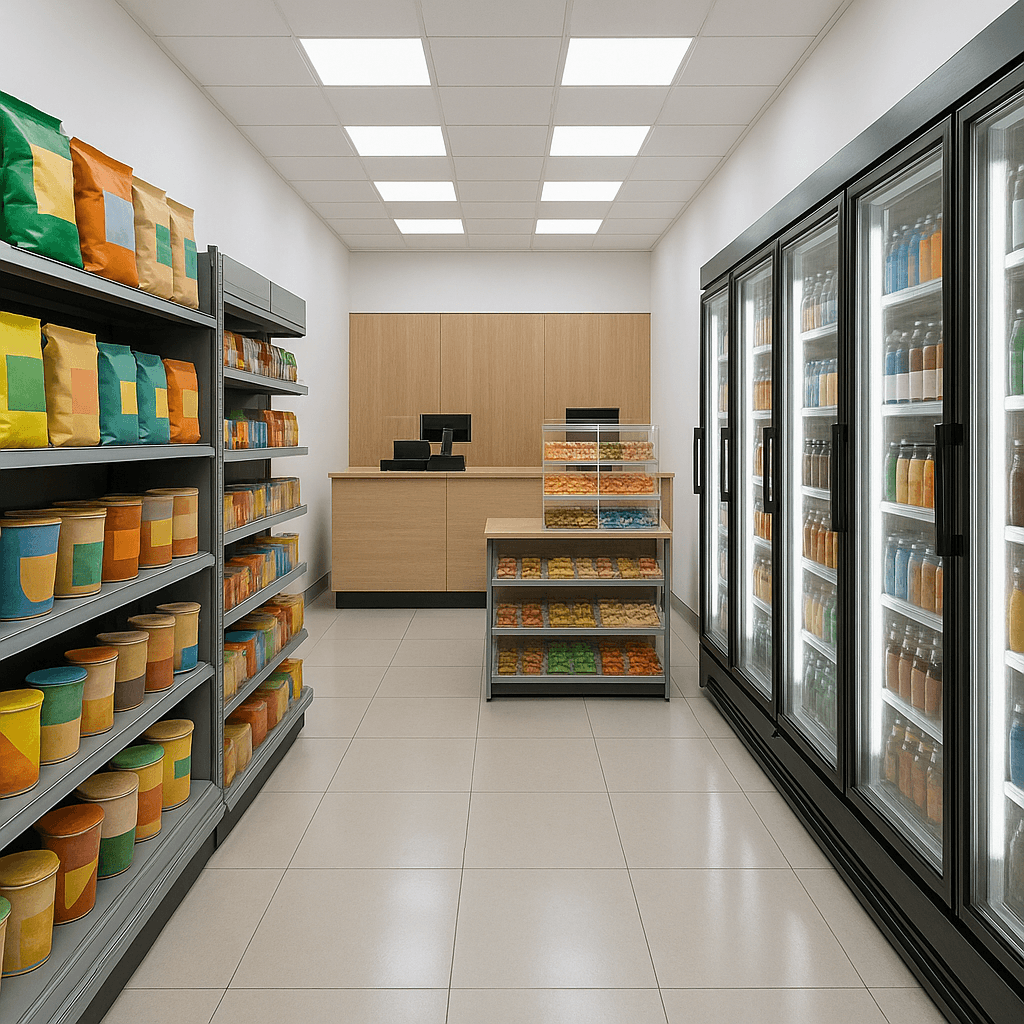
How Much Does It Cost to Start a Convenience Store in Indiana?
Low
$43,000
Medium
$240,800
High
$645,000
National average: $50,000 – $750,000
Interactive Startup Cost Calculator
Startup Cost Calculator
Convenience Store in Indiana
Options
Startup Costs
$245,100
Monthly Costs
$25,800
First Year Total
$554,700
Full Cost Breakdown
| Cost Category | Low | Medium | High | Notes |
|---|---|---|---|---|
| Store Space Lease & Build-Out | $17,200 | $68,800 | $172,000 | A 1,500-2,500 sq ft c-store needs significant refrigeration investment. Walk-in coolers are a meaningful five-figure capital purchase installed. |
| Initial Inventory | $17,200 | $43,000 | $103,200 | Tobacco products and beverages are the highest-volume categories. Maintain 2-3 weeks of fast-moving inventory. |
| POS & Lottery System | $2,580 | $8,600 | $21,500 | Lottery terminals are provided by the state lottery commission. POS integration with fuel pumps requires specialized software. |
| Licenses & Permits | $860 | $4,300 | $12,900 | Tobacco retail license fees vary materially by state. Lottery license applications take 30-60 days. |
| Insurance | $1,720 | $6,020 | $17,200 | Convenience stores have high robbery risk — crime/robbery insurance is essential. Premiums scale with neighborhood crime rate and hours of operation. |
| Security System | $2,580 | $6,880 | $17,200 | Comprehensive surveillance is essential for deterrence, robbery documentation, and insurance. Minimum 8-16 cameras. |
| Working Capital Reserve | $8,600 | $21,500 | $51,600 | C-stores have predictable daily cash flow but need reserves for slow initial weeks. |
| Fuel System (if applicable) (optional) | $4,300 | $86,000 | $430,000 | Fuel is optional but dramatically increases revenue. New UST installation with canopy is a multi-hundred-thousand-dollar capital project. Acquiring an existing fuel system reduces this cost considerably. |
| Total Startup Cost | $50,740 | $159,100 | $395,600 | Required costs only |
Licenses & Permits in Indiana
Licenses & Permits in Indiana
General Business License
Indiana does not have a statewide general business license. Businesses must register their entity with the Indiana Secretary of State and register with the Indiana Department of Revenue for sales tax and withholding tax purposes. Many professions in Indiana require licenses through the Indiana Professional Licensing Agency (IPLA). Individual cities and counties may require local business licenses, particularly for food service, alcohol sales, and certain retail businesses.
Industry-Specific Licenses
- Food Establishment Permit — Indiana State Department of Health or Local Health DepartmentCost: Varies — contact agency • Renewal: Annual
- Home Improvement Supplier Registration — Indiana Attorney General's OfficeCost: Varies — contact agency • Renewal: Annual
- Cosmetology Shop License — Indiana Professional Licensing Agency — State Board of Cosmetology and Barber ExaminersCost: Varies — contact agency • Renewal: Biennial
- Real Estate Broker License — Indiana Professional Licensing Agency — Real Estate CommissionCost: Varies — contact agency • Renewal: Every 3 years
- Child Care Center License — Indiana Family and Social Services Administration — Division of Child ServicesCost: Varies — contact agency • Renewal: Annual
- Retail Liquor License — Indiana Alcohol and Tobacco CommissionCost: Varies — contact agency • Renewal: Annual
- Motor Carrier Registration — Indiana Department of Revenue — Motor Carrier ServicesCost: Varies — contact agency • Renewal: Annual
- Plumbing Contractor License — Indiana Fire Prevention and Building Safety CommissionCost: Varies — contact agency • Renewal: Annual
Home-Based Business Rules
Home-based businesses in Indiana are regulated by local zoning ordinances. Indiana municipalities typically allow home occupations as an accessory use in residential zones with restrictions on the proportion of home space used, signage, and customer visits. Rural areas outside incorporated municipalities generally have minimal restrictions on home-based businesses. Indiana's cottage food law supports home-based food production.
Monthly Operating Costs
After launch, plan for these ongoing monthly expenses for your Convenience Store:
Low
$10,000/mo
Medium
$30,000/mo
High
$80,000/mo
Revenue Potential
Annual Revenue Range
$400,000 – $5,000,000 (annual)
Profit Margins
2-5%
Break-Even Timeline
18-36 months
How Indiana Compares to Neighboring States
Indiana is one of the more affordable states for launching a Convenience Store, with a cost-of-living index of 90.6 (national average is 100). Compared to neighboring Michigan ($246,400 median startup cost), Indiana offers lower costs for a Convenience Store.
Common Mistakes to Avoid
- 1
Underestimating the complexity of a fuel system — environmental regulations, insurance, and maintenance are significant
- 2
Buying a store in a low-traffic location — convenience stores live on traffic count and impulse purchases
- 3
Not implementing proper inventory management — shrinkage from theft is a meaningful share of revenue at stores without controls
- 4
Underestimating tobacco and lottery licensing timeline — allow 60-90 days for all permits
- 5
Ignoring the prepared food opportunity — hot food and coffee are the highest-margin items in a c-store
Next Steps to Launch Your Convenience Store
- 1
Form your LLC in Indiana — convenience stores sell regulated products (tobacco, alcohol, lottery) and carry significant inventory liability (filing fee: $95). If you would rather not file the paperwork yourself, you can compare business formation services.
This is a paid link. If you sign up through it, we earn a commission at no extra cost to you.
- 2
Obtain a Indiana retail business license and any tobacco retailer license required for selling cigarettes and tobacco products
- 3
Apply for a beer and wine or full liquor license if selling alcohol — Indiana ABC licenses can take 30-90 days to process
- 4
Obtain a Indiana lottery retailer license if selling lottery tickets — apply through Indiana lottery commission
- 5
Get commercial general liability and property insurance; premiums scale with location and operating hours
- 6
Set up a convenience store POS system (Verifone, Gilbarco, or PDI) with tobacco age-verification prompts and lottery ticket scanning
- 7
Establish wholesale accounts with Core-Mark, McLane, or Indiana regional C-store distributors for snack, beverage, and tobacco inventory
- 8
Install security cameras covering all aisles, coolers, and the register — theft prevention is critical for high-turnover retail
Frequently Asked Questions
Related Businesses in Indiana
Start a Convenience Store in Other States
See the national overview for Convenience Store or browse all businesses you can start in Indiana.