How Much Does It Cost to Start a Furniture Store in Massachusetts?
Starting a Furniture Store in Massachusetts typically costs between $77,000 and $924,000, with a median estimate of $308,000. Massachusetts’s cost of living runs 50% above the national average, which increases commercial rent and labor costs. LLC formation in Massachusetts costs $500 to file. Most furniture store businesses take 3-6 months to launch.
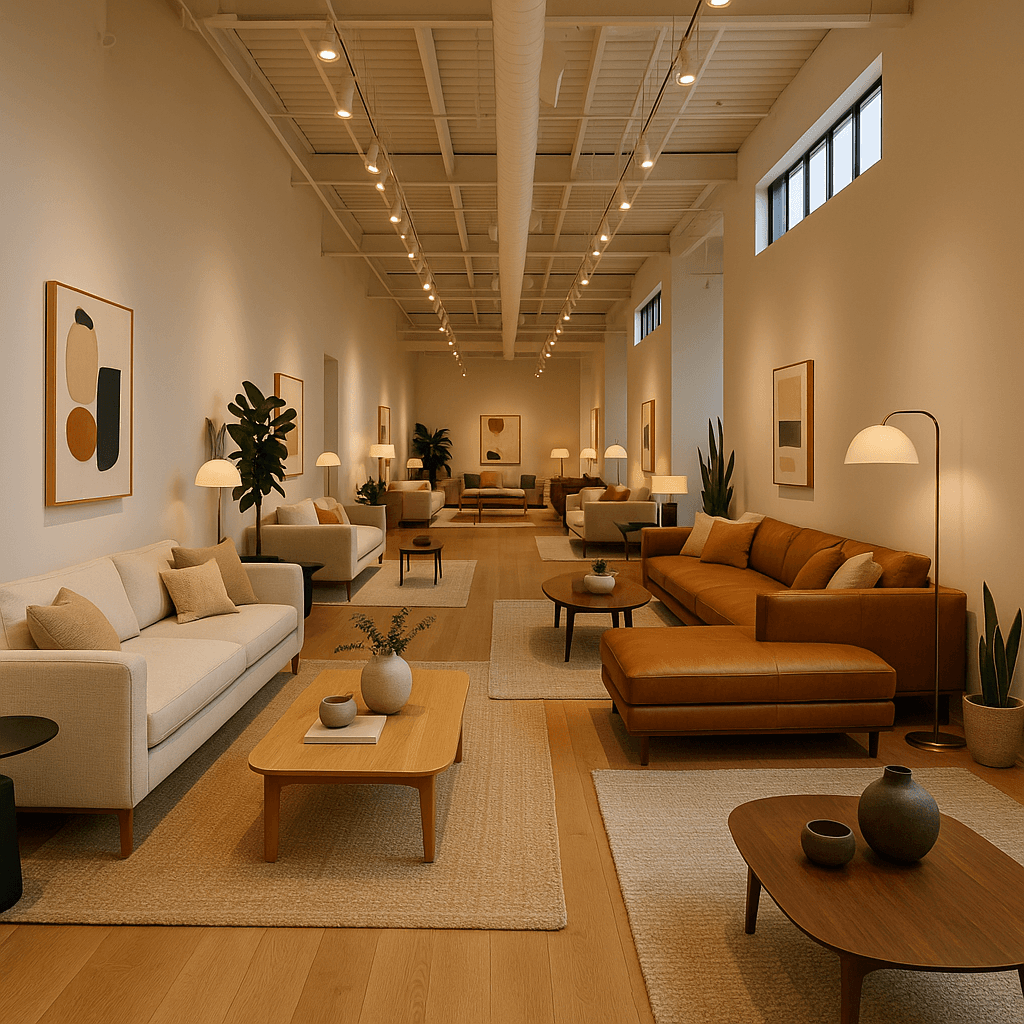
How Much Does It Cost to Start a Furniture Store in Massachusetts?
Low
$77,000
Medium
$308,000
High
$924,000
National average: $50,000 – $600,000
Interactive Startup Cost Calculator
Startup Cost Calculator
Furniture Store in Massachusetts
Options
Startup Costs
$349,160
Monthly Costs
$38,500
First Year Total
$811,160
Full Cost Breakdown
| Cost Category | Low | Medium | High | Notes |
|---|---|---|---|---|
| Retail Space Lease & Build-Out | $23,100 | $92,400 | $308,000 | Furniture showrooms need 3,000-10,000+ sq ft. Warehouse space for inventory adds cost. Lighting for furniture display requires specialized fixtures. |
| Opening Inventory | $46,200 | $154,000 | $462,000 | Furniture inventory is the largest startup cost. Buy on consignment or floor samples to reduce capital requirements initially. |
| Delivery Vehicle & Equipment | $7,700 | $30,800 | $92,400 | A quality 24-foot box truck is a meaningful five-figure capital purchase new and a more modest five-figure outlay used. Delivery capability is a competitive advantage. |
| POS & Inventory Management | $770 | $4,620 | $15,400 | Furniture retail has complex special order tracking needs. A retail POS with custom order capabilities is essential. |
| Licenses & Permits | $154 | $770 | $3,080 | Mattress retailers may need a state bedding license in some states. Check your state's regulations. |
| Insurance | $2,300 | $8,050 | $23,000 | Commercial auto for the delivery truck and cargo insurance for furniture in transit are essential. |
| Marketing & Showroom Events | $3,080 | $12,320 | $38,500 | Furniture customers research online before visiting stores. Strong Google presence and professional photography are essential. |
| Working Capital Reserve | $15,400 | $46,200 | $138,600 | Furniture is a big-ticket, slow-turn business. Revenue can be lumpy — strong reserves prevent cash flow problems. |
| Total Startup Cost | $98,704 | $349,160 | $1,080,980 | Required costs only |
Licenses & Permits in Massachusetts
Licenses & Permits in Massachusetts
General Business License
Massachusetts does not have a statewide general business license, but businesses must register their entity with the Massachusetts Secretary of State (Corporations Division) and register with the Massachusetts Department of Revenue for sales tax and employer tax purposes. Many Massachusetts cities and towns require local business certificates — Boston, Cambridge, Worcester, and other municipalities have their own licensing systems. The state offers a MassTaxConnect portal for tax registration.
Industry-Specific Licenses
- Food Establishment Permit — Massachusetts Department of Public Health or Local Board of HealthCost: Varies — contact agency • Renewal: Annual
- Home Improvement Contractor Registration — Massachusetts Office of Consumer Affairs and Business RegulationCost: Varies — contact agency • Renewal: Biennial
- Cosmetology Shop License — Massachusetts Board of Registration of CosmetologyCost: Varies — contact agency • Renewal: Biennial
- Real Estate Broker License — Massachusetts Board of Registration of Real Estate Brokers and SalespersonsCost: Varies — contact agency • Renewal: Biennial
- Child Care Program License — Massachusetts Department of Early Education and Care (EEC)Cost: Varies — contact agency • Renewal: Annual
- Common Victualler License and All Alcohol License — Massachusetts Alcoholic Beverages Control Commission or Local License AuthorityCost: Varies — contact agency • Renewal: Annual
- Marijuana Retailer License — Massachusetts Cannabis Control CommissionCost: Varies — contact agency • Renewal: Annual
- Transportation Network Company License — Massachusetts Department of Public UtilitiesCost: Varies — contact agency • Renewal: Annual
Home-Based Business Rules
Massachusetts cities and towns regulate home-based businesses through local zoning bylaws. Boston allows home occupations with restrictions on signage, customer visits, employees, and the proportion of home space used for business. Many Massachusetts communities restrict the types of businesses allowed as home occupations. Massachusetts's Chapter 40A amendments have expanded housing-based business opportunities, but commercial regulations vary widely by municipality.
Monthly Operating Costs
After launch, plan for these ongoing monthly expenses for your Furniture Store:
Low
$8,000/mo
Medium
$25,000/mo
High
$70,000/mo
Revenue Potential
Annual Revenue Range
$300,000 – $3,000,000 (annual)
Profit Margins
5-12%
Break-Even Timeline
18-36 months
How Massachusetts Compares to Neighboring States
Massachusetts is a higher-cost state for starting a Furniture Store, with a cost-of-living index of 149.5 (national average is 100). Compared to neighboring New York ($278,000 median startup cost), Massachusetts has higher costs for a Furniture Store.
| State | Est. Cost | LLC Fee |
|---|---|---|
| Massachusetts (current) | $308,000 | $500 |
| New York | $278,000 | $200 |
| Vermont | $218,000 | $125 |
| New Hampshire | $234,000 | $102 |
| Rhode Island | $224,000 | $150 |
| Connecticut | $238,000 | $120 |
Common Mistakes to Avoid
- 1
Carrying too many slow-moving SKUs — furniture inventory is expensive to hold and difficult to liquidate
- 2
Not offering financing — furniture customers expect payment plans; partnering with Synchrony or Snap Finance is essential
- 3
Underestimating delivery operation complexity — furniture delivery requires trained two-person crews and proper insurance
- 4
Overstocking expensive pieces without customer demand data
- 5
Competing head-on with IKEA and Ashley HomeStore — focus on quality, local service, and categories they don't serve
Next Steps to Launch Your Furniture Store
- 1
Register your Furniture Store as an LLC with the Massachusetts Secretary of State ($500 filing fee). If you would rather not file the paperwork yourself, you can compare business formation services.
This is a paid link. If you sign up through it, we earn a commission at no extra cost to you.
- 2
Apply for a Massachusetts sales tax permit/seller's permit and resale certificate for wholesale furniture purchases
- 3
Obtain a Massachusetts business license and local retail establishment permit for your showroom location
- 4
Establish wholesale accounts with furniture manufacturers or attend High Point Market (North Carolina) for product sourcing
- 5
Get commercial property, general liability, and commercial auto insurance for delivery operations — typically a meaningful four-figure annual premium combined
- 6
Hire delivery drivers and purchase or lease a box truck for white-glove furniture delivery service
- 7
Set up your showroom POS with custom order tracking — furniture retail relies heavily on special orders
- 8
Create a floor plan with lifestyle room vignettes — shoppers visualize purchases better in room settings
Frequently Asked Questions
Related Businesses in Massachusetts
Start a Furniture Store in Other States
See the national overview for Furniture Store or browse all businesses you can start in Massachusetts.