How Much Does It Cost to Start a Juice Bar & Smoothie Shop in Kansas?
Starting a Juice Bar & Smoothie Shop in Kansas typically costs between $20,750 and $207,500, with a median estimate of $74,700. Kansas’s cost of living is 10% below the national average, which helps reduce operating expenses like commercial rent and labor. LLC formation in Kansas costs $160 to file. Most juice bar & smoothie shop businesses take 2-4 months to launch.
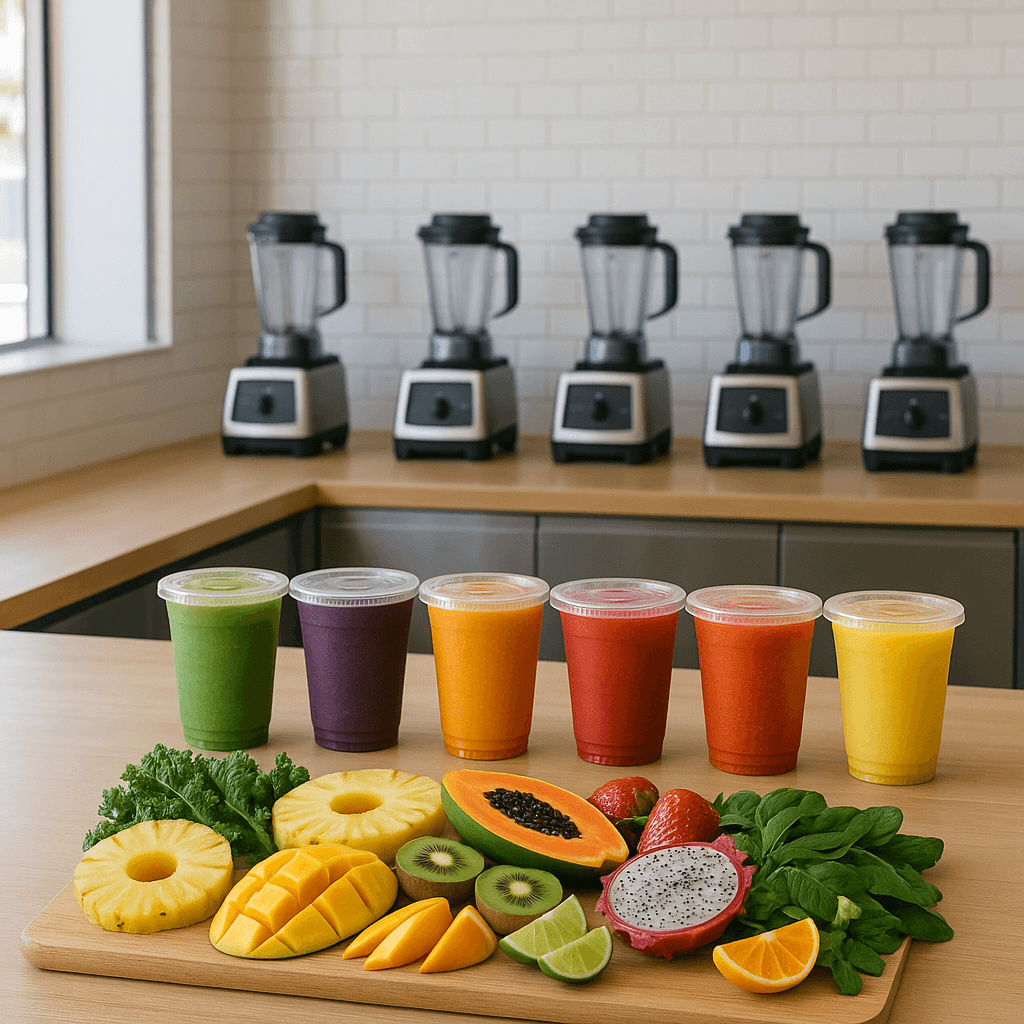
How Much Does It Cost to Start a Juice Bar & Smoothie Shop in Kansas?
Low
$20,750
Medium
$74,700
High
$207,500
National average: $25,000 – $250,000
Interactive Startup Cost Calculator
Startup Cost Calculator
Juice Bar & Smoothie Shop in Kansas
Options
Startup Costs
$75,945
Monthly Costs
$9,960
First Year Total
$195,465
Full Cost Breakdown
| Cost Category | Low | Medium | High | Notes |
|---|---|---|---|---|
| Retail Space Lease & Build-Out | $4,150 | $24,900 | $66,400 | Juice bars work well in small 400-800 sq ft spaces near gyms, yoga studios, or transit hubs. |
| Juicing & Blending Equipment | $4,150 | $14,940 | $41,500 | A commercial Vitamix or Blendtec is a low-to-mid four-figure capital cost each. Commercial cold-press juicers are a meaningful four-to-five-figure capital line item. |
| Refrigeration & Display | $2,490 | $6,640 | $16,600 | Grab-and-go pre-made juice display drives impulse purchases and increases revenue per transaction. |
| Initial Produce & Inventory | $1,660 | $4,980 | $12,450 | Produce is perishable — order 3-5 days at a time initially. Build supplier relationships for discounts. |
| Licenses & Permits | $415 | $1,660 | $4,150 | Cold-press juice sold off-premise may require additional food safety labeling under FDA rules. |
| POS & Payment System | $415 | $1,660 | $4,150 | Loyalty programs are especially effective for juice bars — health-focused customers are high-frequency visitors. |
| Insurance | $664 | $2,075 | $4,980 | Product liability is essential — a customer illness from contaminated produce can result in significant claims. |
| Branding & Marketing | $1,245 | $4,150 | $12,450 | Partner with local gyms, yoga studios, and fitness influencers for cross-promotion. Instagram is essential. |
| Working Capital Reserve | $4,980 | $14,940 | $41,500 | Juice bars tied to gym proximity benefit from predictable morning rush traffic from day one. |
| Total Startup Cost | $20,169 | $75,945 | $204,180 | Required costs only |
Licenses & Permits in Kansas
Licenses & Permits in Kansas
General Business License
Kansas does not have a statewide general business license. Businesses must register their entity with the Kansas Secretary of State and register with the Kansas Department of Revenue for sales tax purposes if selling taxable goods or services. Some Kansas cities require a local business license — Wichita, Overland Park, and Kansas City (Kansas) have their own licensing requirements. The state offers a one-stop business registration portal at KSBizCenter.org.
Industry-Specific Licenses
- Food Service Establishment License — Kansas Department of Agriculture — Division of Food SafetyCost: Varies — contact agency • Renewal: Annual
- Contractor Registration — Kansas Office of the State Fire Marshal or Local JurisdictionCost: Varies — contact agency • Renewal: Annual
- Cosmetology Establishment License — Kansas Board of CosmetologyCost: Varies — contact agency • Renewal: Annual
- Real Estate Broker License — Kansas Real Estate CommissionCost: Varies — contact agency • Renewal: Biennial
- Child Care Center License — Kansas Department for Children and FamiliesCost: Varies — contact agency • Renewal: Annual
- Fertilizer License — Kansas Department of AgricultureCost: Varies — contact agency • Renewal: Annual
- Retail Liquor License — Kansas Division of Alcoholic Beverage ControlCost: Varies — contact agency • Renewal: Annual
- Motor Carrier Permit — Kansas Department of Revenue — Motor CarrierCost: Varies — contact agency • Renewal: Annual
Home-Based Business Rules
Home-based businesses in Kansas are regulated by local zoning ordinances in incorporated municipalities. Kansas's many small towns and rural communities are generally accommodating of home-based businesses. Wichita and larger Kansas cities allow home occupations with restrictions on commercial signage, customer traffic, and the proportion of home space used for business. Kansas's cottage food law supports home-based food production with direct consumer sales.
Monthly Operating Costs
After launch, plan for these ongoing monthly expenses for your Juice Bar & Smoothie Shop:
Low
$5,000/mo
Medium
$12,000/mo
High
$30,000/mo
Revenue Potential
Annual Revenue Range
$80,000 – $600,000 (annual)
Profit Margins
6-14%
Break-Even Timeline
12-24 months
How Kansas Compares to Neighboring States
Kansas is one of the more affordable states for launching a Juice Bar & Smoothie Shop, with a cost-of-living index of 89.8 (national average is 100). Compared to neighboring Nebraska ($76,500 median startup cost), Kansas offers lower costs for a Juice Bar & Smoothie Shop.
Common Mistakes to Avoid
- 1
Opening in a location without a fitness-conscious customer base nearby
- 2
Underestimating produce waste — poor inventory management can push food cost well past a sustainable share of revenue
- 3
Not developing a signature menu item that creates word-of-mouth buzz
- 4
Pricing too low — healthy consumers expect and will pay premium prices for quality ingredients
- 5
Neglecting the grab-and-go display — pre-made bottles dramatically increase revenue per square foot
Next Steps to Launch Your Juice Bar & Smoothie Shop
- 1
Register your Juice Bar as an LLC with the Kansas Secretary of State ($160 filing fee). If you would rather not file the paperwork yourself, you can compare business formation services.
This is a paid link. If you sign up through it, we earn a commission at no extra cost to you.
- 2
Obtain a Kansas retail food establishment permit and food handler certifications for all staff
- 3
Pass the Kansas health department inspection for your juice bar build-out and cold storage equipment
- 4
Source commercial cold-press juicers, blenders, and refrigerated display cases — collectively a substantial five-figure capital outlay
- 5
Establish wholesale produce accounts with local farms or restaurant supply distributors for fresh daily deliveries
- 6
Get general liability and commercial property insurance for your juice bar — typically a low four-figure annual premium
- 7
Apply for a Kansas sales tax permit for retail sales and set up your POS system
- 8
Build your social media presence with daily product photography before your opening week
Frequently Asked Questions
Related Businesses in Kansas
Coffee Shop
Food & Beverage$60,000 – $350,000
View in Kansas →
Gym & Fitness Center
Health & Wellness$50,000 – $1,000,000
View in Kansas →
Bakery
Food & Beverage$20,000 – $300,000
View in Kansas →
Food Truck
Food & Beverage$45,000 – $200,000
View in Kansas →
Meal Prep Business
Food & Beverage$20,000 – $200,000
View in Kansas →
Start a Juice Bar & Smoothie Shop in Other States
See the national overview for Juice Bar & Smoothie Shop or browse all businesses you can start in Kansas.