How Much Does It Cost to Start a Meal Prep Business in Washington?
Starting a Meal Prep Business in Washington typically costs between $23,600 and $236,000, with a median estimate of $76,700. Washington’s cost of living runs 13% above the national average, which increases commercial rent and labor costs. LLC formation in Washington costs $200 to file. Most meal prep business businesses take 1-3 months to launch.
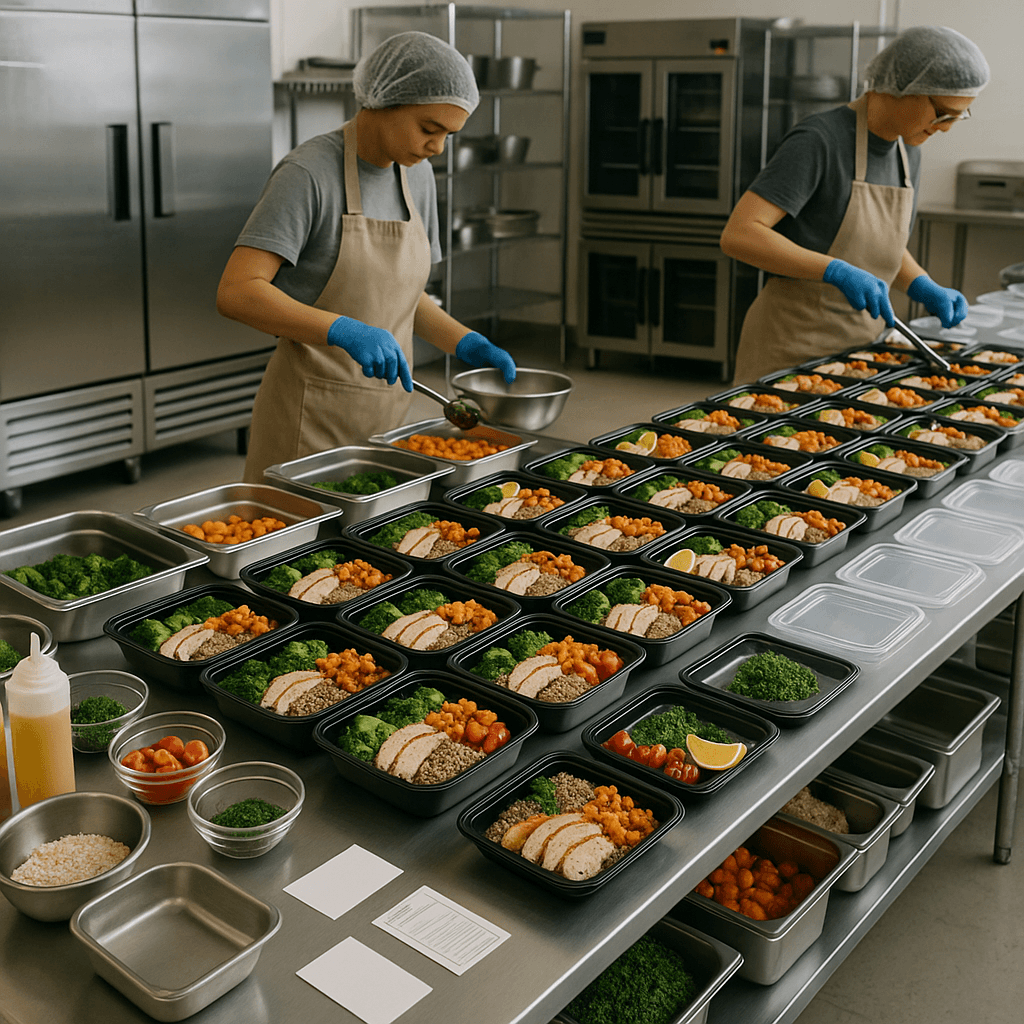
How Much Does It Cost to Start a Meal Prep Business in Washington?
Low
$23,600
Medium
$76,700
High
$236,000
National average: $20,000 – $200,000
Interactive Startup Cost Calculator
Startup Cost Calculator
Meal Prep Business in Washington
Options
Startup Costs
$90,530
Monthly Costs
$17,700
First Year Total
$302,930
Full Cost Breakdown
| Cost Category | Low | Medium | High | Notes |
|---|---|---|---|---|
| Commercial Kitchen Access | $2,360 | $9,440 | $35,400 | Shared commissary kitchen rental is typically billed hourly or as a monthly membership. A dedicated kitchen requires full restaurant-level build-out costs and lease commitment. |
| Production Equipment | $5,900 | $17,700 | $59,000 | A commercial vacuum sealer extends meal shelf life to roughly 7-10 days and is one of the highest-leverage capital purchases for a meal-prep operation. Portion scales ensure consistency. Reusable commercial containers add a per-meal packaging cost. |
| Delivery Infrastructure | $3,540 | $11,800 | $35,400 | Insulated delivery bags are an inexpensive per-unit cost but scale with the active subscriber base. A cargo van or refrigerated vehicle becomes necessary as routes grow. Route optimization software is billed on a low monthly subscription. |
| Permits & Licenses | $1,590 | $3,360 | $8,080 | Meal prep businesses need food handler permits for all staff and a commissary agreement. Labeling requirements for packaged meals vary by state — see https://www.fda.gov/food for federal labeling baselines. |
| Initial Food Inventory | $3,540 | $9,440 | $23,600 | Order from wholesale distributors like Sysco or Restaurant Depot. Build relationships with local farms for fresh produce at wholesale pricing. |
| Technology & Software | $1,180 | $5,900 | $23,600 | Platforms like Subbly, Cratejoy, or custom Shopify stores manage meal plan subscriptions and are billed on monthly subscriptions that scale with subscriber count. |
| Insurance | $2,300 | $5,750 | $17,250 | Product liability is critical for a food delivery business — a single foodborne-illness claim can be devastating. Commercial auto is required for delivery vehicles. |
| Marketing & Customer Acquisition | $2,360 | $9,440 | $29,500 | Customer acquisition cost for meal prep subscriptions varies meaningfully by channel and creative. Free first-meal offers convert well. Subscriber lifetime value depends almost entirely on retention — the longer subscribers stay, the more profitable the channel investment becomes. |
| Working Capital Reserve | $5,900 | $17,700 | $59,000 | Meal prep businesses often need 2-3 months to build enough subscribers to cover fixed kitchen and labor costs. Maintain operating reserves during ramp-up. |
| Total Startup Cost | $28,670 | $90,530 | $290,830 | Required costs only |
Licenses & Permits in Washington
Licenses & Permits in Washington
General Business License
Washington State requires most businesses to obtain a Unified Business Identifier (UBI) through the Business Licensing Service (BLS) of the Department of Revenue. Washington has no state income tax, but does have a Business and Occupation (B&O) tax applied to gross receipts, which is unique among US states. Additionally, businesses must register for the B&O tax and any applicable retail sales tax. Many cities require a separate city business license endorsed onto the state license through a streamlined endorsement system.
Industry-Specific Licenses
- Food Service Establishment Permit — Washington State Department of Health or Local Health DepartmentCost: Varies — contact agency • Renewal: Annual
- General Contractor Registration — Washington State Department of Labor and IndustriesCost: Varies — contact agency • Renewal: Annual
- Master Cosmetician Shop License — Washington State Department of Licensing — CosmetologyCost: Varies — contact agency • Renewal: Annual
- Real Estate Broker License — Washington State Department of Licensing — Real EstateCost: Varies — contact agency • Renewal: Biennial
- Family Day Care License / Child Care Center License — Washington State Department of Children, Youth, and FamiliesCost: Varies — contact agency • Renewal: Annual
- Marijuana Retailer License — Washington State Liquor and Cannabis BoardCost: Varies — contact agency • Renewal: Annual
- Spirits/Beer/Wine Restaurant License — Washington State Liquor and Cannabis BoardCost: Varies — contact agency • Renewal: Annual
- Money Transmitter License — Washington State Department of Financial InstitutionsCost: Varies — contact agency • Renewal: Annual
Home-Based Business Rules
Washington municipalities regulate home-based businesses through local ordinances within the GMA planning framework. Seattle allows home occupations in residential zones with restrictions on customer visits, commercial delivery, and non-resident employees. Many Washington communities have updated their home occupation rules to accommodate remote workers and tech entrepreneurs. Washington's cottage food law supports home-based food production and direct consumer sales subject to a state-defined annual cap.
Monthly Operating Costs
After launch, plan for these ongoing monthly expenses for your Meal Prep Business:
Low
$5,000/mo
Medium
$15,000/mo
High
$50,000/mo
Revenue Potential
Annual Revenue Range
$5,000 – $150,000 (monthly)
Profit Margins
10%-20% net profit typical
Break-Even Timeline
6-18 months
How Washington Compares to Neighboring States
Washington is a higher-cost state for starting a Meal Prep Business, with a cost-of-living index of 112.9 (national average is 100). Compared to neighboring Idaho ($62,400 median startup cost), Washington has higher costs for a Meal Prep Business.
Common Mistakes to Avoid
- 1
Underpricing — factor in food cost (typically a target around a third of revenue), packaging, delivery, labor, and overhead before setting subscription prices
- 2
Overcommitting to subscribers before kitchen capacity and staffing can handle volume
- 3
Not managing cancellation rates — meal prep subscription churn is structurally high in the category and erodes economics quickly without retention programs
- 4
Skipping calorie and macro labeling — nutrition-focused customers expect accurate macronutrient information
- 5
Using regular delivery vehicles without proper food temperature management — food safety liability is significant
- 6
Not building a referral program — referred customers retain materially better than paid-acquisition customers and at lower CAC
Next Steps to Launch Your Meal Prep Business
- 1
Register your Meal Prep Service as an LLC with the Washington Secretary of State ($200 filing fee). If you would rather not file the paperwork yourself, you can compare business formation services.
This is a paid link. If you sign up through it, we earn a commission at no extra cost to you.
- 2
Obtain a Washington food production license and inspect your commercial kitchen for meal prep operations
- 3
Verify Washington cottage food law compliance — most meal prep businesses require a licensed commercial kitchen
- 4
Get product liability and general liability insurance for food production businesses; premiums scale with revenue and product mix
- 5
Set up your online ordering platform with weekly subscription and a la carte meal options
- 6
Establish wholesale grocery and protein supplier accounts for volume pricing on recurring inventory
- 7
Obtain a Washington sales tax permit for meal sales and set up your accounting system
- 8
Launch with a limited menu of 8–12 meals, gather customer feedback, and expand offerings based on demand
Frequently Asked Questions
Related Businesses in Washington
Catering Business
Food & Beverage$12,000 – $130,000
View in Washington →
Food Delivery Service
Food & Beverage$10,000 – $130,000
View in Washington →
Ghost Kitchen
Food & Beverage$20,000 – $150,000
View in Washington →
Bakery
Food & Beverage$20,000 – $300,000
View in Washington →
Food Truck
Food & Beverage$45,000 – $200,000
View in Washington →
Start a Meal Prep Business in Other States
See the national overview for Meal Prep Business or browse all businesses you can start in Washington.