How Much Does It Cost to Start a Meal Prep Business in South Carolina?
Starting a Meal Prep Business in South Carolina typically costs between $18,000 and $180,000, with a median estimate of $58,500. South Carolina’s cost of living is 7% below the national average, which helps reduce operating expenses like commercial rent and labor. LLC formation in South Carolina costs $110 to file. Most meal prep business businesses take 1-3 months to launch.
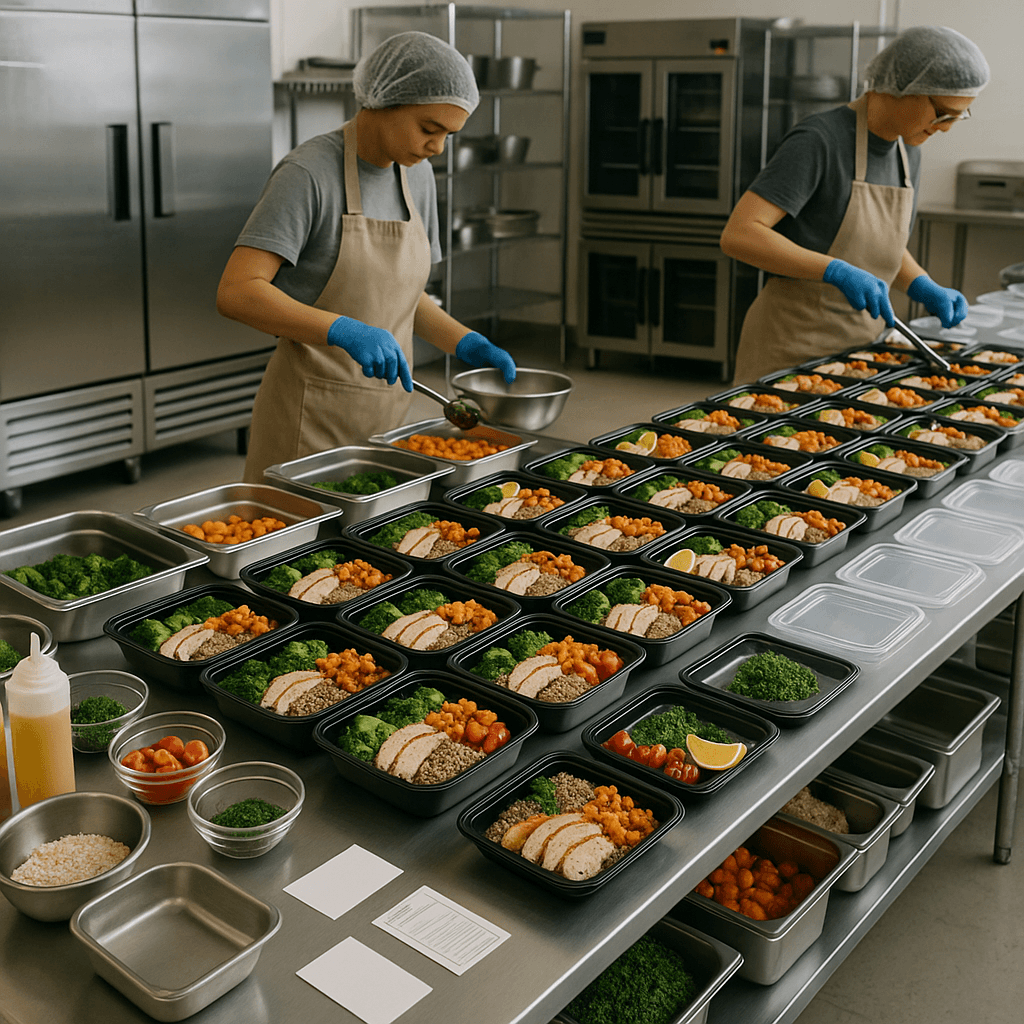
How Much Does It Cost to Start a Meal Prep Business in South Carolina?
Low
$18,000
Medium
$58,500
High
$180,000
National average: $20,000 – $200,000
Interactive Startup Cost Calculator
Startup Cost Calculator
Meal Prep Business in South Carolina
Options
Startup Costs
$68,400
Monthly Costs
$13,500
First Year Total
$230,400
Full Cost Breakdown
| Cost Category | Low | Medium | High | Notes |
|---|---|---|---|---|
| Commercial Kitchen Access | $1,800 | $7,200 | $27,000 | Shared commissary kitchen rental is typically billed hourly or as a monthly membership. A dedicated kitchen requires full restaurant-level build-out costs and lease commitment. |
| Production Equipment | $4,500 | $13,500 | $45,000 | A commercial vacuum sealer extends meal shelf life to roughly 7-10 days and is one of the highest-leverage capital purchases for a meal-prep operation. Portion scales ensure consistency. Reusable commercial containers add a per-meal packaging cost. |
| Delivery Infrastructure | $2,700 | $9,000 | $27,000 | Insulated delivery bags are an inexpensive per-unit cost but scale with the active subscriber base. A cargo van or refrigerated vehicle becomes necessary as routes grow. Route optimization software is billed on a low monthly subscription. |
| Permits & Licenses | $450 | $1,800 | $5,400 | Meal prep businesses need food handler permits for all staff and a commissary agreement. Labeling requirements for packaged meals vary by state — see https://www.fda.gov/food for federal labeling baselines. |
| Initial Food Inventory | $2,700 | $7,200 | $18,000 | Order from wholesale distributors like Sysco or Restaurant Depot. Build relationships with local farms for fresh produce at wholesale pricing. |
| Technology & Software | $900 | $4,500 | $18,000 | Platforms like Subbly, Cratejoy, or custom Shopify stores manage meal plan subscriptions and are billed on monthly subscriptions that scale with subscriber count. |
| Insurance | $1,800 | $4,500 | $13,500 | Product liability is critical for a food delivery business — a single foodborne-illness claim can be devastating. Commercial auto is required for delivery vehicles. |
| Marketing & Customer Acquisition | $1,800 | $7,200 | $22,500 | Customer acquisition cost for meal prep subscriptions varies meaningfully by channel and creative. Free first-meal offers convert well. Subscriber lifetime value depends almost entirely on retention — the longer subscribers stay, the more profitable the channel investment becomes. |
| Working Capital Reserve | $4,500 | $13,500 | $45,000 | Meal prep businesses often need 2-3 months to build enough subscribers to cover fixed kitchen and labor costs. Maintain operating reserves during ramp-up. |
| Total Startup Cost | $21,150 | $68,400 | $221,400 | Required costs only |
Licenses & Permits in South Carolina
Licenses & Permits in South Carolina
General Business License
South Carolina requires most businesses to obtain a Business License from the city or county where they operate — there is no statewide general business license. Businesses must register their entity with the South Carolina Secretary of State and register with the South Carolina Department of Revenue for retail license (sales tax) and withholding tax purposes. South Carolina's 271 municipalities each have their own business licensing ordinances under the South Carolina Business License Tax Standardization Act.
Industry-Specific Licenses
- Retail Food Establishment Permit — South Carolina Department of Health and Environmental Control — Division of Environmental HealthCost: Varies — contact agency • Renewal: Annual
- Residential Builder and Home Improvement License — South Carolina Residential Builders CommissionCost: Varies — contact agency • Renewal: Annual
- Cosmetology Salon License — South Carolina Board of CosmetologyCost: Varies — contact agency • Renewal: Annual
- Real Estate Broker License — South Carolina Real Estate CommissionCost: Varies — contact agency • Renewal: Annual
- Child Care Center License — South Carolina Department of Social Services — Division of Child Care ServicesCost: Varies — contact agency • Renewal: Annual
- On-Premises Beer and Wine Permit — South Carolina Department of Revenue — Alcohol Beverage LicensingCost: Varies — contact agency • Renewal: Annual
- Tour Operator License — South Carolina Department of Parks, Recreation and TourismCost: Varies — contact agency • Renewal: Annual
- Medical Practice License — South Carolina Board of Medical ExaminersCost: Varies — contact agency • Renewal: Annual
Home-Based Business Rules
Home-based businesses in South Carolina are regulated by local municipal and county ordinances. Most South Carolina municipalities allow home occupations in residential zones with restrictions on customer traffic, commercial signage, and non-resident employees. South Carolina's many rural communities have minimal restrictions on home-based businesses. The state's cottage food law supports home-based food production and direct consumer sales.
Monthly Operating Costs
After launch, plan for these ongoing monthly expenses for your Meal Prep Business:
Low
$5,000/mo
Medium
$15,000/mo
High
$50,000/mo
Revenue Potential
Annual Revenue Range
$5,000 – $150,000 (monthly)
Profit Margins
10%-20% net profit typical
Break-Even Timeline
6-18 months
How South Carolina Compares to Neighboring States
South Carolina is one of the more affordable states for launching a Meal Prep Business, with a cost-of-living index of 92.7 (national average is 100). Compared to neighboring North Carolina ($62,400 median startup cost), South Carolina offers lower costs for a Meal Prep Business.
| State | Est. Cost | LLC Fee |
|---|---|---|
| South Carolina (current) | $58,500 | $110 |
| North Carolina | $62,400 | $125 |
| Georgia | $61,100 | $100 |
Common Mistakes to Avoid
- 1
Underpricing — factor in food cost (typically a target around a third of revenue), packaging, delivery, labor, and overhead before setting subscription prices
- 2
Overcommitting to subscribers before kitchen capacity and staffing can handle volume
- 3
Not managing cancellation rates — meal prep subscription churn is structurally high in the category and erodes economics quickly without retention programs
- 4
Skipping calorie and macro labeling — nutrition-focused customers expect accurate macronutrient information
- 5
Using regular delivery vehicles without proper food temperature management — food safety liability is significant
- 6
Not building a referral program — referred customers retain materially better than paid-acquisition customers and at lower CAC
Next Steps to Launch Your Meal Prep Business
- 1
Register your Meal Prep Service as an LLC with the South Carolina Secretary of State ($110 filing fee). If you would rather not file the paperwork yourself, you can compare business formation services.
This is a paid link. If you sign up through it, we earn a commission at no extra cost to you.
- 2
Obtain a South Carolina food production license and inspect your commercial kitchen for meal prep operations
- 3
Verify South Carolina cottage food law compliance — most meal prep businesses require a licensed commercial kitchen
- 4
Get product liability and general liability insurance for food production businesses; premiums scale with revenue and product mix
- 5
Set up your online ordering platform with weekly subscription and a la carte meal options
- 6
Establish wholesale grocery and protein supplier accounts for volume pricing on recurring inventory
- 7
Obtain a South Carolina sales tax permit for meal sales and set up your accounting system
- 8
Launch with a limited menu of 8–12 meals, gather customer feedback, and expand offerings based on demand
Frequently Asked Questions
Related Businesses in South Carolina
Catering Business
Food & Beverage$12,000 – $130,000
View in South Carolina →
Food Delivery Service
Food & Beverage$10,000 – $130,000
View in South Carolina →
Ghost Kitchen
Food & Beverage$20,000 – $150,000
View in South Carolina →
Bakery
Food & Beverage$20,000 – $300,000
View in South Carolina →
Food Truck
Food & Beverage$45,000 – $200,000
View in South Carolina →
Start a Meal Prep Business in Other States
See the national overview for Meal Prep Business or browse all businesses you can start in South Carolina.