How Much Does It Cost to Start a Tire Shop in Nevada?
Starting a Tire Shop in Nevada typically costs between $52,500 and $420,000, with a median estimate of $157,500. Nevada’s cost of living runs 2% above the national average, which increases commercial rent and labor costs. LLC formation in Nevada costs $425 to file. Most tire shop businesses take 3-6 months to launch.
How Much Does It Cost to Start a Tire Shop in Nevada?
Low
$52,500
Medium
$157,500
High
$420,000
National average: $50,000 – $400,000
Interactive Startup Cost Calculator
Startup Cost Calculator
Tire Shop in Nevada
Options
Startup Costs
$176,925
Monthly Costs
$21,000
First Year Total
$428,925
Full Cost Breakdown
| Cost Category | Low | Medium | High | Notes |
|---|---|---|---|---|
| Shop Space Lease & Build-Out | $10,500 | $42,000 | $126,000 | A 4-bay tire shop needs 3,000-5,000 sq ft. Industrial/commercial zoning required. Bay ceiling height minimum 12 feet. |
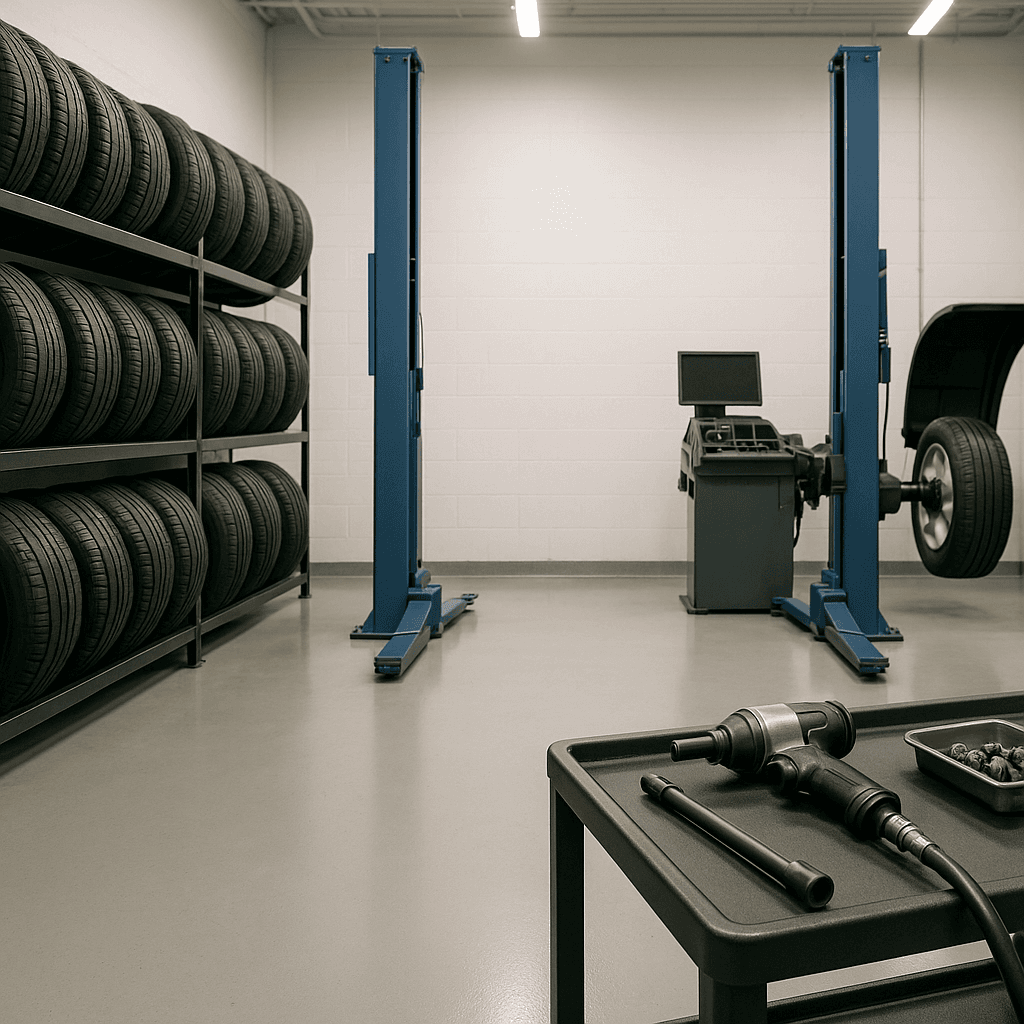
| Tire Changing & Balancing Equipment | $10,500 | $31,500 | $84,000 | A quality Hunter or Hofmann tire changer is a meaningful five-figure capital purchase. Wheel balancer adds an additional five-figure cost. Plan a substantial five-figure equipment package per bay. |
| Vehicle Lifts & Alignment Equipment | $8,400 | $26,250 | $84,000 | A Hunter wheel alignment system is a five-figure capital purchase but increases revenue significantly through per-job alignment add-ons. 2-post lifts are individual mid-four-figure capital items. |
| Opening Tire Inventory | $15,750 | $42,000 | $126,000 | Stock 100-200 tires across 20-30 popular sizes. Just-in-time ordering from distributors (ATD, TBC) reduces initial inventory. |
| Licenses & Permits | $315 | $1,575 | $5,250 | EPA requires proper disposal of old tires — recycling fees are a low per-tire cost charged at point of disposal. Some states require a tire dealer license. |
| Insurance | $3,150 | $8,400 | $26,250 | Garage keepers insurance covers vehicle damage while in your care. Tire shops have significant liability exposure. |
| Marketing & Digital Presence | $1,050 | $4,200 | $15,750 | Being listed as an installer on TireRack.com and Discount Tire Direct generates immediate walk-in business. |
| Working Capital Reserve | $8,400 | $21,000 | $63,000 | Tire shops near highways and in strip mall locations near dealerships build car count quickly. |
| Total Startup Cost | $58,065 | $176,925 | $530,250 | Required costs only |
Licenses & Permits in Nevada
Licenses & Permits in Nevada
General Business License
Nevada requires most businesses to obtain a State Business License from the Nevada Secretary of State, with a state-set annual fee for corporations and LLCs (with a different fee tier for sole proprietors). Nevada has no corporate income tax and no personal income tax, making it very attractive for business incorporation. Additionally, businesses must register with the Nevada Department of Taxation for sales and use tax, and local jurisdictions (particularly Clark County/Las Vegas and Washoe County/Reno) require separate local business licenses.
Industry-Specific Licenses
- Health Permit for Food Establishment — Southern Nevada Health District or Washoe County Health DistrictCost: Varies — contact agency • Renewal: Annual
- Contractor's License — Nevada State Contractors BoardCost: Varies — contact agency • Renewal: Biennial
- Cosmetology Establishment License — Nevada State Board of CosmetologyCost: Varies — contact agency • Renewal: Biennial
- Real Estate Broker License — Nevada Real Estate DivisionCost: Varies — contact agency • Renewal: Biennial
- Gaming License — Nevada Gaming Control BoardCost: Varies — contact agency • Renewal: Annual
- Child Care Facility License — Nevada Division of Child and Family ServicesCost: Varies — contact agency • Renewal: Annual
- Liquor License — Nevada Tax Commission or Local Liquor Licensing AuthorityCost: Varies — contact agency • Renewal: Annual
- Nevada Transportation Authority Certificate — Nevada Transportation AuthorityCost: Varies — contact agency • Renewal: Annual
Home-Based Business Rules
Nevada municipalities and counties regulate home-based businesses through local zoning ordinances. Clark County allows home occupations in residential zones with restrictions on customer visits, signage, and commercial vehicle storage. Nevada's business-friendly environment generally supports home-based businesses, and the no-income-tax advantage applies to home-based businesses as well. Nevada's cottage food law explicitly supports home-based food production and direct consumer sales.
Monthly Operating Costs
After launch, plan for these ongoing monthly expenses for your Tire Shop:
Low
$8,000/mo
Medium
$20,000/mo
High
$50,000/mo
Revenue Potential
Annual Revenue Range
$200,000 – $1,500,000 (annual)
Profit Margins
10-20%
Break-Even Timeline
12-24 months
How Nevada Compares to Neighboring States
Nevada is close to the national average for Tire Shop startup costs, with a cost-of-living index of 101.7. Compared to neighboring California ($228,000 median startup cost), Nevada offers lower costs for a Tire Shop.
| State | Est. Cost | LLC Fee |
|---|---|---|
| Nevada (current) | $157,500 | $425 |
| California | $228,000 | $70 |
| Arizona | $165,000 | $50 |
| Utah | $150,000 | $54 |
| Idaho | $144,000 | $100 |
| Oregon | $168,000 | $100 |
Common Mistakes to Avoid
- 1
Not getting listed as an installer on TireRack.com and Discount Tire Direct — these platforms send pre-purchased customers
- 2
Focusing only on tires without adding alignment — alignment is a meaningful per-job upsell on nearly every tire purchase
- 3
Underestimating the importance of a quick turnaround time — tire customers hate waiting; keep installs under 45 minutes
- 4
Not properly disposing of waste tires — state EPA violations for improper tire disposal carry substantial per-incident penalties
- 5
Ignoring TPMS sensor replacement as an upsell — required after tire changes on most modern vehicles
Next Steps to Launch Your Tire Shop
- 1
Research local zoning requirements in Nevada
- 2
Register your Tire Shop as an LLC in Nevada (filing fee: $425). If you would rather not file the paperwork yourself, you can compare business formation services.
This is a paid link. If you sign up through it, we earn a commission at no extra cost to you.
- 3
Apply for required licenses and permits through the Nevada Secretary of State
- 4
Secure business insurance appropriate for your Tire Shop
- 5
Open a dedicated business bank account to separate personal and business finances
Frequently Asked Questions
Related Businesses in Nevada
Auto Repair Shop
Automotive$75,000 – $500,000
View in Nevada →
Car Wash
Automotive$124,500 – $1,554,000
View in Nevada →
Auto Detailing Business
Automotive$5,000 – $100,000
View in Nevada →
Used Car Dealership
Automotive$50,000 – $600,000
View in Nevada →
Towing Company
Automotive$50,000 – $400,000
View in Nevada →
Start a Tire Shop in Other States
See the national overview for Tire Shop or browse all businesses you can start in Nevada.