How Much Does It Cost to Start a Demolition Company in Missouri?
Starting a Demolition Company in Missouri typically costs between $24,900 and $166,000, with a median estimate of $66,400. Missouri’s cost of living is 11% below the national average, which helps reduce operating expenses like commercial rent and labor. LLC formation in Missouri costs $50 to file. Most demolition company businesses take 2-6 months to launch.
How Much Does It Cost to Start a Demolition Company in Missouri?
Low
$24,900
Medium
$66,400
High
$166,000
National average: $30,000 – $200,000
Interactive Startup Cost Calculator
Startup Cost Calculator
Demolition Company in Missouri
Options
Startup Costs
$63,495
Monthly Costs
$12,450
First Year Total
$212,895
Full Cost Breakdown
| Cost Category | Low | Medium | High | Notes |
|---|---|---|---|---|
| Contractor License & Demolition Permit | $415 | $1,660 | $4,980 | Asbestos and lead work requires specific EPA/state environmental certifications. |
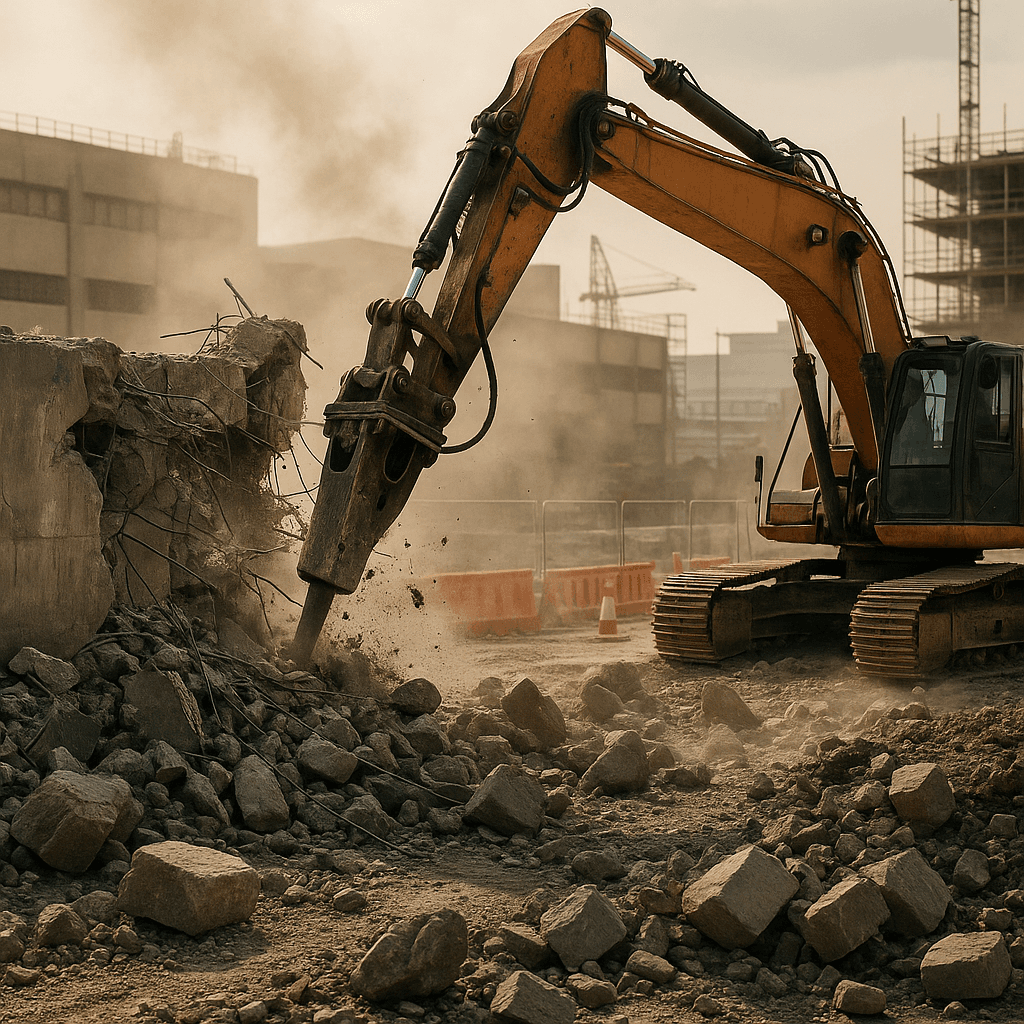
| Demolition Equipment | $8,300 | $24,900 | $66,400 | Hydraulic breaker attachments are a meaningful four-figure capital purchase and multiply productivity on concrete demo. |
| Dump Trucks & Dumpsters | $2,490 | $8,300 | $24,900 | Dumpster partnerships or owning a roll-off truck becomes essential at volume. |
| General Liability Insurance | $2,075 | $5,810 | $14,940 | Annual premium; demolition is one of the highest-risk contractor categories. |
| Safety Equipment & PPE | $415 | $1,245 | $3,320 | Asbestos work requires half-face or full-face PAPR respirators. |
| Working Capital | $6,640 | $16,600 | $41,500 | Landfill disposal tipping fees vary widely by region and material — typically a meaningful two-to-low-three-figure dollar charge per ton; budget carefully. |
| Environmental Certifications (optional) | $415 | $1,660 | $4,150 | Asbestos abatement certification is a major revenue differentiator. |
| Hazmat & Environmental Insurance (optional) | $1,245 | $3,320 | $8,300 | Required for any asbestos or lead abatement work. |
| Total Startup Cost | $20,335 | $58,515 | $156,040 | Required costs only |
Licenses & Permits in Missouri
Licenses & Permits in Missouri
General Business License
Missouri does not have a statewide general business license. Businesses must register their entity with the Missouri Secretary of State and register with the Missouri Department of Revenue for sales and use tax purposes. Missouri cities and counties may require local business licenses — Kansas City, St. Louis, and Springfield each have their own licensing programs. Note that St. Louis City and St. Louis County are separate political entities with different licensing requirements.
Industry-Specific Licenses
- Food Establishment License — Missouri Department of Health and Senior Services — Division of Environmental HealthCost: Varies — contact agency • Renewal: Annual
- Contractor License — Local jurisdiction (St. Louis, Kansas City, Springfield, etc.)Cost: Varies — contact agency • Renewal: Annual
- Cosmetology Establishment License — Missouri Board of Cosmetology and Barber ExaminersCost: Varies — contact agency • Renewal: Biennial
- Real Estate Broker License — Missouri Real Estate CommissionCost: Varies — contact agency • Renewal: Annual
- Child Care Facility License — Missouri Department of Social Services — Family Support DivisionCost: Varies — contact agency • Renewal: Annual
- Retail License for Intoxicating Liquor — Missouri Division of Alcohol and Tobacco ControlCost: Varies — contact agency • Renewal: Annual
- Home Health Agency License — Missouri Department of Health and Senior ServicesCost: Varies — contact agency • Renewal: Annual
- Motor Carrier Operating Authority — Missouri Department of TransportationCost: Varies — contact agency • Renewal: Annual
Home-Based Business Rules
Home-based businesses in Missouri are regulated by local zoning ordinances. Most Missouri municipalities allow home occupations in residential zones with restrictions on commercial signage, customer traffic, and business activities affecting neighbors. Rural Missouri areas outside incorporated municipalities generally have minimal restrictions on home-based businesses. Missouri's Cottage Food Law explicitly authorizes home-based food production and direct consumer sales subject to a state-defined annual cap.
Monthly Operating Costs
After launch, plan for these ongoing monthly expenses for your Demolition Company:
Low
$5,000/mo
Medium
$15,000/mo
High
$40,000/mo
Revenue Potential
Annual Revenue Range
$150,000 – $2,000,000 (annual)
Profit Margins
15-30%
Break-Even Timeline
6-18 months
How Missouri Compares to Neighboring States
Missouri is one of the more affordable states for launching a Demolition Company, with a cost-of-living index of 88.9 (national average is 100). Compared to neighboring Iowa ($66,400 median startup cost), Missouri has comparable costs for a Demolition Company.
Common Mistakes to Avoid
- 1
Demolishing without utility disconnects in place
- 2
Missing asbestos or lead surveys before demolition begins
- 3
Inadequate dust suppression causing neighbor complaints
- 4
No shoring plan for adjacent structure protection
- 5
Underestimating debris volume and disposal costs
Next Steps to Launch Your Demolition Company
- 1
Form your LLC or corporation in Missouri — demolition contractors face major injury and environmental liability (filing fee: $50). If you would rather not file the paperwork yourself, you can compare business formation services.
This is a paid link. If you sign up through it, we earn a commission at no extra cost to you.
- 2
Obtain your Missouri demolition contractor license — most states require a specialty or general contractor license for demolition work
- 3
Complete OSHA 30-Hour Construction Safety training and obtain your OSHA Competent Person designation for demolition operations
- 4
Conduct or obtain EPA asbestos surveys before demolishing older structures — required by EPA NESHAP regulations (https://www.epa.gov/asbestos/asbestos-neshap); failure risks significant fines
- 5
Get a contractor surety bond and general liability insurance — bond requirements vary by state and the GL premium is typically a meaningful four-to-low-five-figure annual cost; both are required by municipalities and general contractors
- 6
Obtain EPA RRP (Renovation, Repair and Painting) certification (https://www.epa.gov/lead/renovation-repair-and-painting-program) if working on older structures that may contain lead paint
- 7
Register with your Missouri environmental agency for hazardous waste hauling if removing asbestos, lead, or contaminated materials
- 8
Establish relationships with salvage yards and recycling facilities in Missouri — separating metals, concrete, and wood reduces disposal costs
Frequently Asked Questions
Related Businesses in Missouri
Start a Demolition Company in Other States
See the national overview for Demolition Company or browse all businesses you can start in Missouri.