How Much Does It Cost to Start a Moving Company in New York?
Starting a Moving Company in New York typically costs between $41,700 and $417,000, with a median estimate of $139,000. New York’s cost of living runs 26% above the national average, which increases commercial rent and labor costs. LLC formation in New York costs $200 to file. Most moving company businesses take 2-5 months to launch.
How Much Does It Cost to Start a Moving Company in New York?
Low
$41,700
Medium
$139,000
High
$417,000
National average: $30,000 – $300,000
Interactive Startup Cost Calculator
Startup Cost Calculator
Moving Company in New York
Options
Startup Costs
$131,980
Monthly Costs
$20,850
First Year Total
$382,180
Full Cost Breakdown
| Cost Category | Low | Medium | High | Notes |
|---|---|---|---|---|
| Moving Trucks | $20,850 | $69,500 | $208,500 | A used 26-ft box truck is a meaningful five-figure capital purchase; new units run materially higher. Renting trucks initially is a common way to reduce upfront capital while validating job volume. |
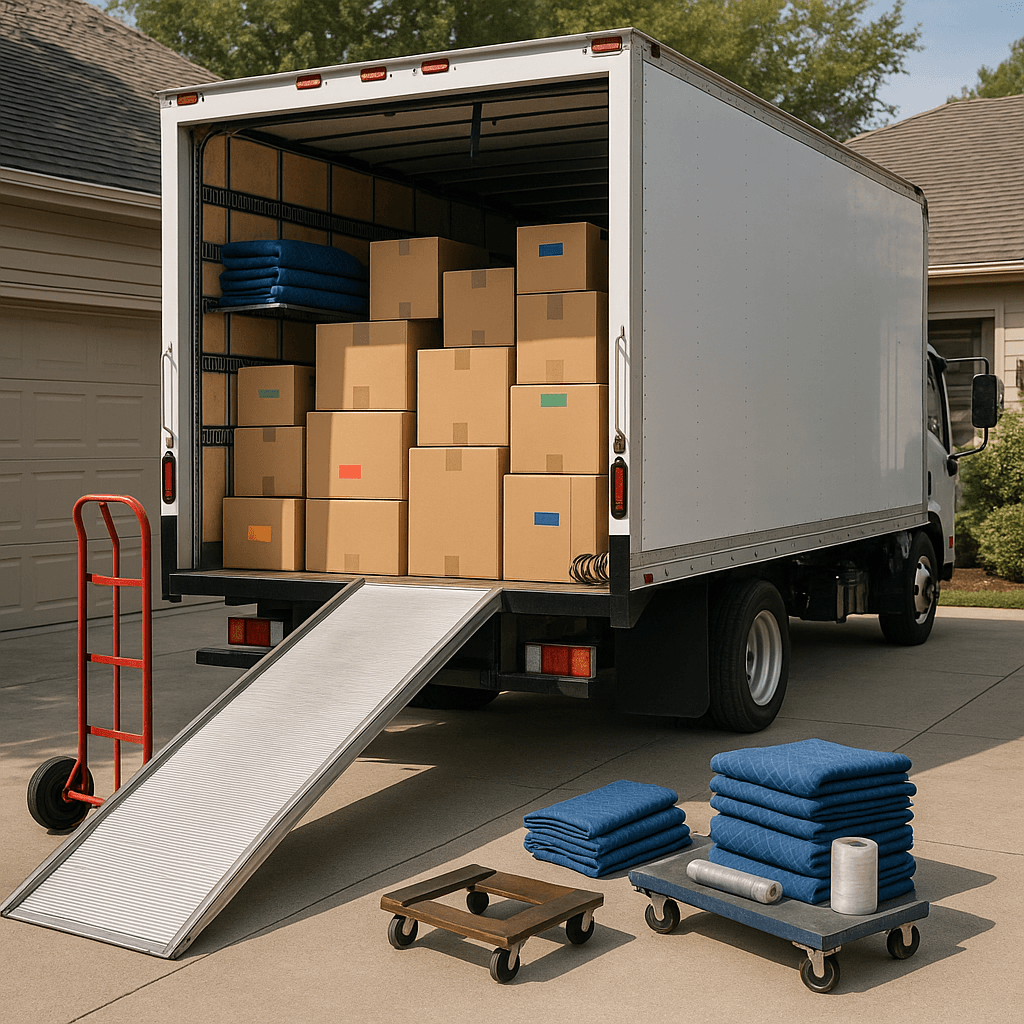
| Moving Equipment | $2,780 | $8,340 | $20,850 | An opening kit of 100-200 moving pads, an appliance dolly, a piano board, straps, and shrink wrap is collectively a meaningful low-four-figure investment. All items are essential — under-equipping crews drives damage claims. |
| FMCSA Authority & DOT Number | $417 | $2,085 | $6,950 | FMCSA operating authority (broker or carrier) is a one-time federal filing fee. USDOT number registration is free. Interstate moves require FMCSA authority — see https://www.fmcsa.dot.gov/registration for current fees and requirements. |
| Insurance | $6,000 | $18,000 | $60,000 | Cargo insurance is legally required for interstate moves with minimum coverage limits set by FMCSA. A two-truck operation typically carries premiums in the four-to-low-five figure annual range, scaling with truck count, payroll, and claims history. |
| Moving Software & Quoting System | $695 | $3,475 | $11,120 | MoveHQ, SmartMoving, and Oncue are popular moving company platforms billed on monthly subscriptions that scale with truck and seat count. |
| Marketing & Lead Generation | $1,390 | $6,950 | $27,800 | Pay-per-lead services like MovingHelp.com and Moving.com price leads as a transactional cost. Google Ads converts well for movers with high purchase intent on commercial-mover keywords. |
| Working Capital Reserve | $6,950 | $20,850 | $69,500 | Moving is seasonal — peak season is May through September. Budget for slower winter months when labor utilization drops sharply. |
| Moving Supplies & Packing Materials | $695 | $2,780 | $6,950 | Packing supplies can be resold to customers or included in full-service moves at a markup over wholesale. |
| Total Startup Cost | $39,777 | $131,980 | $411,670 | Required costs only |
Licenses & Permits in New York
Licenses & Permits in New York
General Business License
New York State does not have a statewide general business license, but businesses face extensive state and local regulatory requirements. All businesses must register their entity with the New York Department of State and register with the New York State Department of Taxation and Finance for sales tax and employer taxes. New York City has its own comprehensive business licensing system through the NYC Department of Consumer and Worker Protection (DCWP), with over 55 different license types. Upstate New York municipalities have their own varying requirements.
Industry-Specific Licenses
- Food Service Establishment Permit — New York State Department of Agriculture and Markets or NYC DOHMHCost: Varies — contact agency • Renewal: Annual
- Home Improvement Contractor License (NYC) or General Contractor License (local) — NYC Department of Consumer and Worker Protection or Local Department of BuildingsCost: Varies — contact agency • Renewal: Biennial
- Appearance Enhancement Establishment License — New York State Department of State — Division of Licensing ServicesCost: Varies — contact agency • Renewal: Biennial
- Real Estate Broker License — New York State Department of State — Division of Licensing ServicesCost: Varies — contact agency • Renewal: Biennial
- Child Day Care Center License — New York Office of Children and Family ServicesCost: Varies — contact agency • Renewal: Annual
- Retail On-Premises License — New York State Liquor AuthorityCost: Varies — contact agency • Renewal: Biennial
- Adult-Use Retail Dispensary License — New York Office of Cannabis ManagementCost: Varies — contact agency • Renewal: Annual
- For-Hire Vehicle License (NYC) or Motor Carrier Permit — NYC Taxi and Limousine Commission or NYSDOTCost: Varies — contact agency • Renewal: Annual
- Money Transmitter License — New York State Department of Financial ServicesCost: Varies — contact agency • Renewal: Annual
Home-Based Business Rules
New York City severely restricts home-based businesses through its Zoning Resolution, limiting most business activities in residential zones to those clearly incidental to residential use. Upstate New York municipalities have more permissive home occupation rules. New York's cottage food law allows limited home-based food production with direct consumer sales. New York City artists, creative professionals, and consultants often operate home-based businesses under limited residential zoning provisions.
Monthly Operating Costs
After launch, plan for these ongoing monthly expenses for your Moving Company:
Low
$5,000/mo
Medium
$15,000/mo
High
$45,000/mo
Revenue Potential
Annual Revenue Range
$100,000 – $1,000,000 (annual)
Profit Margins
10-25%
Break-Even Timeline
6-18 months
How New York Compares to Neighboring States
New York is a higher-cost state for starting a Moving Company, with a cost-of-living index of 125.8 (national average is 100). Compared to neighboring Vermont ($109,000 median startup cost), New York has higher costs for a Moving Company.
| State | Est. Cost | LLC Fee |
|---|---|---|
| New York (current) | $139,000 | $200 |
| Vermont | $109,000 | $125 |
| Massachusetts | $154,000 | $500 |
| Connecticut | $119,000 | $120 |
| New Jersey | $125,000 | $125 |
| Pennsylvania | $96,000 | $125 |
Common Mistakes to Avoid
- 1
Not obtaining FMCSA operating authority before doing interstate moves — federal penalties for unlicensed interstate transport are substantial
- 2
Underestimating cargo insurance requirements — a single damage claim on a piano, artwork, or designer furniture can run into the five figures
- 3
Starting without a proper quoting system — visual surveys are more accurate than phone estimates
- 4
Hiring unreliable labor — one bad move crew destroys reputation and triggers Yelp reviews
- 5
Not collecting payment at delivery for local moves — chasing collection after the truck is unloaded is very difficult
Next Steps to Launch Your Moving Company
- 1
Form your LLC in New York — moving companies handle valuable customer property and face significant cargo damage claims (filing fee: $200). If you would rather not file the paperwork yourself, you can compare business formation services.
This is a paid link. If you sign up through it, we earn a commission at no extra cost to you.
- 2
Register with FMCSA to obtain a USDOT number and Motor Carrier (MC) number — required for all interstate moves and most New York intrastate operations
- 3
Obtain a New York motor carrier permit for intrastate moves — required in most states even for local moving companies
- 4
Get cargo insurance and commercial auto insurance for your moving trucks — coverage limits are set by FMCSA for interstate operations
- 5
Purchase or lease a 16–26 ft box truck — cargo vans work for small moves; larger jobs require a proper moving truck with lift gate
- 6
File your tariff (rate schedule) with New York Public Utilities Commission if required — some states regulate moving company rates
- 7
Set up moving company software (HireAHelper dispatch, Movegistics, or MoveitPro) for estimates, crew scheduling, and invoicing
- 8
Obtain a surety bond if required by your New York — some states require bonds for moving company licensing, with face values set by state
Frequently Asked Questions
Related Businesses in New York
Storage Unit Facility
Real Estate$200,000 – $2,000,000
View in New York →
Cleaning Business
Home Services$1,500 – $37,000
View in New York →
Trucking Company
Transportation & Logistics$30,000 – $200,000
View in New York →
Courier & Delivery Service
Transportation & Logistics$8,000 – $55,000
View in New York →
Handyman Business
Home Services$2,000 – $33,000
View in New York →
Start a Moving Company in Other States
See the national overview for Moving Company or browse all businesses you can start in New York.